Author: Adam

Wild foodist

Who Knew? Purslane Seeds Are Loaded With Health Benefits … Here Are 5 Of Them

Too often when discussing the health benefits of wild plants, emphasis is placed on the obvious.  For example, the scientific literature abounds with research specifically on fruits from the Rosa genus, and it is commonly reported that some species of rose contain 20 times the vitamin C content of an orange.  But if we dig a little deeper, we soon discover that the seeds within the hips of roses also pack a nutritional punch, although in a slightly different way.  Research has demonstrated that seed oils from roses contain nutritionally and physiologically important fatty acids, including oleic, linoleic, and linolenic acids, as well as several forms of vitamin E, including α-tocopherol, β-tocopherol, and γ-tocopherol (1).

Another example of the obvious … grapes.  Of course, most nutritional love is directed toward the fleshy portion of the fruits.  Browse any grocery store, and the dominating seedless varieties will corroborate this.  But many a supermarket shopper will forget, however, that the juicy, sometimes-too-sugary grape, in its natural state does indeed contain reproductive structures – which just so happen to also be quite nutritious.  Research has shown that seeds from the common grape (Vitis vinifera) contain significant levels of calcium, magnesium, phosphorus, and potassium, as well as 8.2% protein, 14.0% fat and 38.6% fiber by dry weight (2).  Remember, these are the seeds we’re talking about … not the actual fleshly fruit.

And then there is purslane (Portulaca oleracea) – that low-lying, succulent-resembling, ubiquitous plant (a “weed” to some) that forms extensive mats amongst gardens, fields, and disturbed habitats here in western Pennsylvania.  Purslane, it is frequently reported, is the leading land-plant source of α-linolenic acid (an omega-3 fatty acid), containing between 300-400 milligrams per 100 grams of fresh material.  Purslane also contains impressive levels of potassium, magnesium, and calcium, while additionally providing gamma-linolenic acid and α-tocopherol.  Clearly, purslane is a nutritional superstar, and it sure is a wonder as to why health experts aren’t rallying more (if at all) for this pervasive plant.

Most of the research, however, focuses on the leafy portion of purslane, and I could devote an entire treatise on the health benefits attributed to its greens.  I won’t do that now.

Instead I’d like to showcase a part of the purslane plant that, while not gaining much mass attention, has been producing quite favorable results in scientific studies – and may confer health benefits to you, should you consume them.

Introducing … the health benefits of purslane seeds

portulacaoleraceaseedswildfoodism

Purslane seeds within pods. Credit: Henry E. Hooper


Cholesterol and triglyceride health

Consume purslane seeds, and your cardiovascular disease risk markers may improve.  Sound too good to be true?  Researchers have seen it firsthand.

The most recent study involving purslane seeds and health was performed on obese adolescent participants, split into two groups (3).  The first group (experimental group) was given one capsule containing 500 milligrams of powdered purslane seeds, two times a day for one month.  The second group (control group) was given the same directions, though with a placebo capsule instead.  Compared to the control group, the adolescents given purslane seeds showed statistically significant improvements in LDL cholesterol (conventionally referred to as “bad cholesterol”) and triglyceride levels – both of which, when elevated, are generally associated with an increased risk of cardiovascular disease.

The researchers attributed this lipid profile-improving effect to purslane’s polyphenols and antioxidants, two classes of plant compounds which have been shown routinely to be protective of cardiovascular health (4).  While the scientific literature is a bit thin when it comes to purslane seeds and lipid markers, this particular study’s results are very promising and warrant further experimentation.

Type 2 diabetes

Type 2 diabetes, a condition characterized by insulin resistance, is the 7th leading cause of death in the United States.  With nearly two million new cases diagnosed each year in the United States, it is important, now more than ever, to discover treatment methods that are cost-effective and safe … for example, purslane seeds.

In a study published in the Journal of Ethnopharmacology, participants with type 2 diabetes were divided into two groups (5).  The experimental group was given 5 grams of purslane seeds twice daily, while the control group was given metformin, a standard oral antidiabetic drug.  Results showed that purslane seeds were just as effective as metformin in decreasing fasting and postprandial (after meal) blood glucose, as well as insulin levels.  Additional results included a significant decrease in serum levels of triglycerides, total cholesterol, LDL cholesterol, body weight, and body mass index.  The researchers attributed these effects to purslane seeds’ polyunsaturated fatty acids, flavonoids, and polysaccharides.

Metformin doesn’t contain any naturally occurring polyunsaturated fatty acids, flavonoids, and polysaccharides, though its synthetic structure does rake in a pretty profit.  It is the most widely prescribed antidiabetic drug in the world (more than 40 million prescriptions are administered annually in the United States alone).  Despite tests, marketing, and hype, and like most prescriptions, metformin presents a host of side effects, including muscle pain, irregular heartbeat, dizziness, and fatigue.  All the more reason to consider purslane seeds as a supplementary effective treatment for type 2 diabetes.

Abnormal uterine bleeding

Abnormal uterine bleeding (AUB) is a condition characterized by heavy, irregular, or prolonged menstrual bleeding, or unscheduled non-menstrual bleeding in premenopausal women.  Quality of life can be severely affected due to pain and discomfort, and iron-deficiency anemia can result from excessive loss of blood.  While drugs and surgery seem to be the preferred treatments in the United States, Iranian medicine treats AUB with purslane seeds.  A recent study, published in Phytotherapy Research, gives this latter treatment two thumbs up (6).

To discover the effects of purslane seeds on AUB, researchers recruited ten premenopausal women with AUB who did not respond to conventional drugs, and were candidates for hysterectomy.  The women were administered 5 grams of purslane seed powder in a glass of water every 4 hours orally, 48 hours after the onset of menstruation for 3 days.  Results showed that 80% of the women reported duration and volume of their bleeding had decreased, and the patterns of their periods had normalized.  What’s more, a three-month follow up revealed that abnormal bleeding had not returned in the women who originally responded to the purslane seed treatment.

Of course, the sample size was small (ten participants), and few (if any) additional studies exist on this subject.  The results are promising, however, as both traditional (Iranian) and modern medicine have reported success using purslane seeds to treat AUB.

Today, the standard treatment for abnormal uterine bleeding includes the levonorgestrel intra-uterine system, non-steroidal anti-inflammatory drugs, antifibrinolytics, progestogens, oral contraceptives, danazol (a prescription drug), and hysterectomy.  Purslane seeds, too, seem to be effective, though how much money can realistically be made from a plant that grows through cracks in sidewalks?

Liver cancer

The previous studies were all performed on human participants.  While no research analyzing the effects between purslane seeds and liver cancer exists on actual human participants, we do have supportive evidence using human cellular cultures.

A recent study found that an extract of purslane seeds reduced cell viability of hepatocellular carcinoma cells … cells that are responsible for the most common type of liver cancer (7).  Parsley seeds (Petroselinum sativum), too, displayed similar anti-cancer properties against the same cells in this particular study.

The 5-year survival rate for individuals with any stage of liver cancer is 15% … quite an astoundingly low percentage.  Current conventional treatments include surgery, radiation, and chemotherapy – treatments which are all well-known to present serious side effects.  Purslane seeds may not save the world from any form of liver cancer, though they ought to be considered viable candidates, as research suggests, when evaluating potential therapeutic options.

Protection against chemotherapy side-effects

As mentioned in the last paragraph, chemotherapy is a form of cancer treatment that is routinely associated with damaging side effects.  Doxorubicin, a chemotherapeutic drug used to treat cancers of the uterus, ovaries, breast, and lung, is known to cause unwanted toxicities of the heart, kidneys, liver, and testicles.

Purslane seeds to the rescue

Research has shown that an ethanolic (alcoholic) extract of purslane seeds and shoots demonstrated protection against doxorubicin-induced damage in adult male rats, all while improving liver function, increasing antioxidant activity, and decreasing oxidation of lipids (8).  The researchers concluded that supplementation with purslane shoot and seed extracts may provide a cushion against the toxicity caused by doxorubicin … without producing any harmful side-effects.

Further experimentation is warranted in this field, as research on human participants is limited.  Using the information we have so far, we can currently hypothesize that purslane seed administration may indeed be an effective (and safe) supplemental option in human cancer treatment.

And there we have it:  5 documented health benefits of purslane … seeds.  Of course, many more benefits exist, as purslane seeds contain important nutrients, including α-linolenic acid (an omega-3 fatty acid), vitamin E, and antioxidants.  If you’ve made it down this far in the post (thanks, I appreciate that!), it should be quite apparent:  when we neglect to consume purslane seeds, we are missing out on critical nutrition and medicine.

Easy fix, though … on your next jaunt through your favorite purslane patch, and if the season is right, spend a few moments (or several) harvesting the seeds.  Simple, really.

Thanks for reading, and as always … happy foraging!


Like what you’ve read?  Sign up below to receive notifications for new posts, and don’t forget to check out the Facebook (facebook.com/wildfoodism) and Twitter (twitter.com/wildfoodism) pages to learn more about wild food nutrition and identification!

Thank you!
Adam Haritan

adamheadshot3

signinformwildfoodism

Learn To Identify And Harvest Wild Cranberries Using These 6 Steps

wildcranberrieswildfoodismWouldn’t you love to know, with almost absolute certainty, where a specific wild food grows?  I’m not talking about merely being able to recite a particular habitat characteristic of a specific plant or mushroom, but rather really knowing, before even setting out on your foraging adventure, where your organism of interest can be found.

For example, reading in a field guide, you will learn that wild rice can generally be found in bodies of flowing water, such as rivers, streams, and shallow lakes that have an inlet and outlet.  Morel mushrooms, you will read, are associated with old apple orchards and stands of tulip poplar, ash, beech, maple, and dead or dying elm trees.

It’s one thing to verbalize this information.  It’s another to truly know and understand where these habitats actually exist.

“… shallow lakes with an inlet and outlet?  Where the heck are those?”

“… old apple orchards?  I don’t even know where to begin.”

In this post, I am going to present an easy and simplified guide to locating, identifying, and harvesting wild edibles, using wild cranberries as an example.  Many blogs and field guides will lay out exact habitats for wild organisms, providing extremely detailed text-book descriptions.  This is important information, and a great starting point.  It is my intention to explain a bit further how I then use this information to go out and find, with certainty, the exact food for which I am looking.

Stalking the wild cranberries

  • Use a field guide to learn habitat, defining features, physical description, and proper season of harvesting.

    As previously stated, a field guide is an excellent starting tool.  How can you find anything without knowing exactly what it is you are looking for?  While the question may appear to be a metaphysical one, it is certainly relevant to the topic at hand.

    The wild cranberry (Vaccinium macrocarpon) is a trailing evergreen shrub with leaves oblong-elliptic and entire (click on the image above to view details). Its habitat generally includes slightly acidic bogs, swamps, peaty wetlands and, occasionally, poorly drained meadows.  The fruit hardly needs a description, as the cultivated cranberry, found inhabiting supermarkets across the country, appears quite the same.  In the wild, the fruit is (no surprise) red, sour, and 10-20 millimeters in size, hanging from pedicels 2-3 centimeters long.  The small cranberry (Vaccinium oxycoccos) presents slight physical differences, though it can be used and eaten in the same manner as the large wild cranberry.  Both fruits ripen in the autumn months.

    North American distribution of large cranberry

    North American distribution of large cranberry, highlighted in green (USDA Plants Database)

  • Ask yourself, “Have I been to an area that includes the specified habitat?”

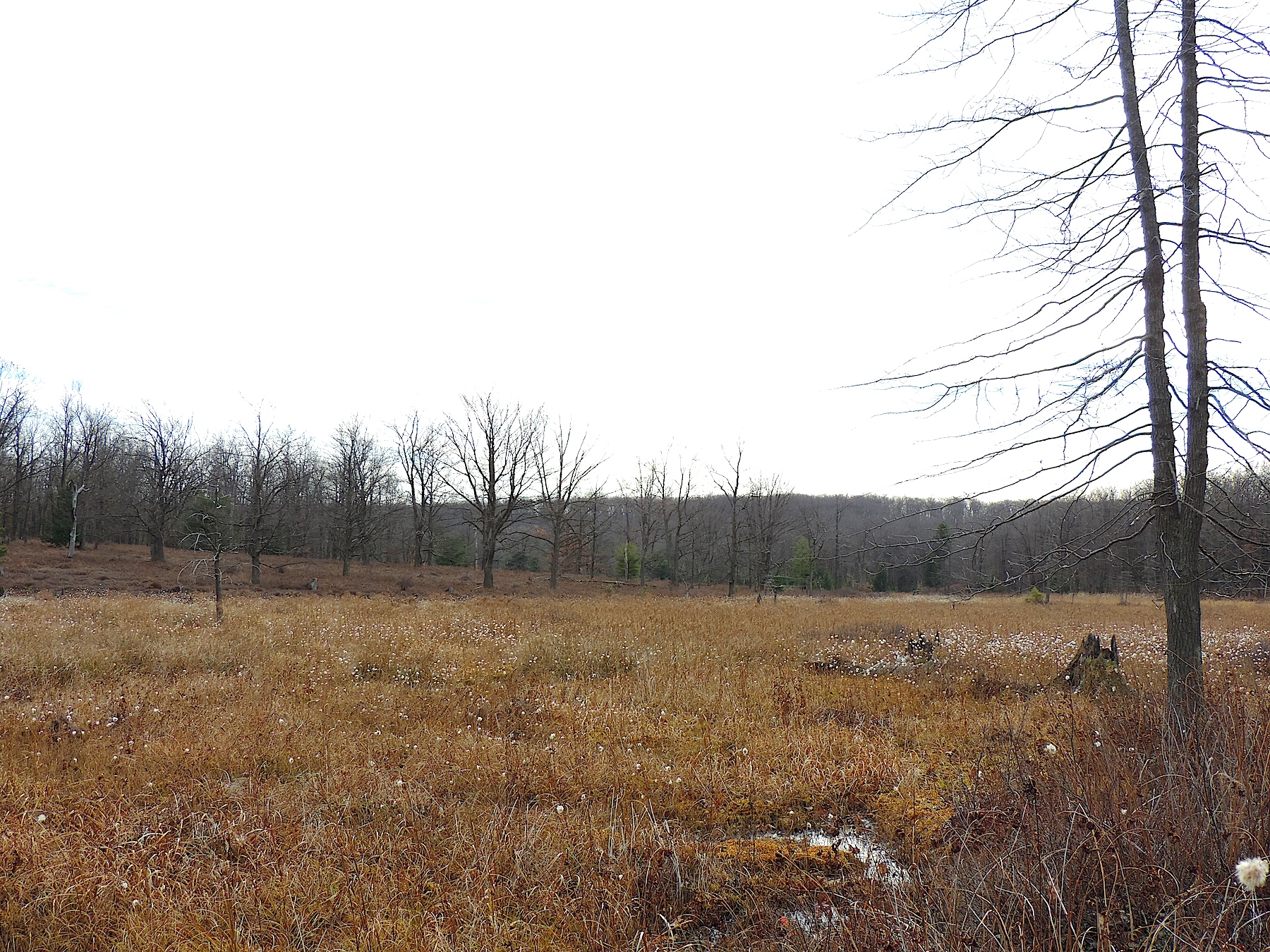
    It’s a simple question:  Have you ever stumbled upon bogs, swamps, peaty wetlands, or poorly drained meadows?  Think for a moment.  It is likely that you have invested a good portion of your time exploring the wilderness, whether through foraging adventures, hiking, camping, mountain biking, climbing, or any other outdoor excursions.  Can you ever remember a habitat resembling the one characteristic of wild cranberries?

    If so, go there when the time is right (supermarkets don’t count).  If not, read on.

    cranberrybogwildfoodism

    A typical cranberry habitat – bog, during the proper season of harvesting – autumn.

  • Ask around.

    Remember the old adage:  “Ask, and you shall receive.”  Truer words were never spoken.

    You can approach this step one of two ways:  Ask others directly if they know where wild cranberries grow, or ask them if they’re aware of any bogs, swamps, or peaty wetlands in your general area.  I find this step rather effective in fostering the success of my hunt, with the latter question yielding more results than the former (secret spots are hard to part with).

    Who to ask?  Now, I understand that rules and regulations apply regarding the harvesting of wild plants and mushrooms in certain areas, and I’ll provide the usual disclaimer:  know the guidelines in your targeted area.  Having said that, contacting community and state parks and speaking to park staff officials can yield positive results.  Emails, phone calls, and personal interactions (the latter being my go-to method) have all yielded success in my experiences when asking both questions (Do you know where wild cranberries grow? Do you know of any bogs in the area?).  Other groups to survey include naturalists, local foragers, and those who frequent online foraging forums.

    And of course, naturalist-led walks, workshops, and events are excellent educational opportunities to learn your land firsthand, both through the learning experience itself, as well as through the ability to ask event leaders and participants the aforementioned questions.

  • Use a search engine

    Type “(your state) wild cranberries” into your favorite search engine.  Additionally, search the wild cranberry habitat by typing “(your state) bog” into a search engine.  Don’t limit your search to the first page of search results.  Rather, keep digging deeper, through state park websites, research materials, personal blogs, and online forums.  Chances are good that you will discover pertinent information leading to an area replete with wild cranberries.

  • Use a topographic map

    “How little is on an ordinary map!  How little, I mean, that concerns the walker and the lover of nature.” – Henry David Thoreau

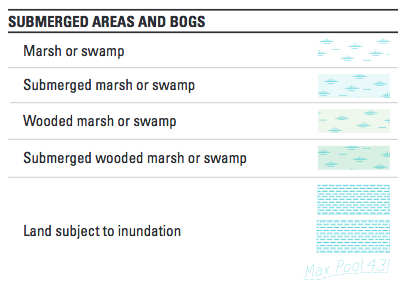
    Thoreau surely wasn’t talking about a topographic map, as this particular tool contains a detailed and graphic representation of natural and cultural features, including water, relief, and vegetation.  This resource is especially helpful in the search for wild cranberries.  If you recall, cranberries typically inhabit bogs, swamps, and peaty wetlands.  Lucky for us, this habitat is featured on a topographic map.

    topomapwildfoodism

    Accessing a topographic map of your area is easy.  To view free maps, check out http://www.mytopo.com/maps/

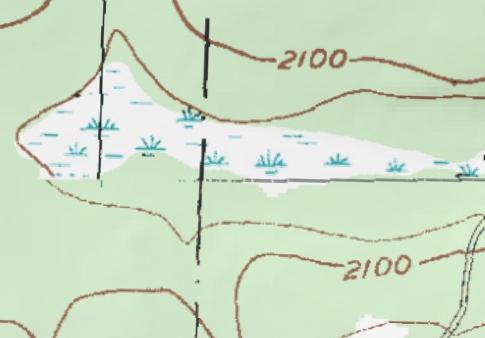
    I am not affiliated with the website in any way, though I find it useful when searching for particular habitats, in this case – bogs.  Now, let’s imagine you are scanning your area using a topographic map, and you discover something that looks like this:

    bogwildfoodism

    If located within the general geographic location of wild cranberries (Pennsylvania, for sure; Oklahoma, not likely), this is most certainly an area where your coveted fruits may be found.  Examine further the general area, seeing if there are more bogs nearby, if the land is public, and whether or not the land is accessible to humans (hiking in 20 miles for cranberries displays some serious dedication).

  • Become an observer of habitats

    With each adventure into the wilderness, take note of the habitats you encounter.  Write down your experiences.  Develop a catalog of ecosystems.  When hiking a favorite trail, for instance, notice that habitats can morph and evolve every few miles, starting with a hemlock forest lining a river valley, moving upland into an area with hardwood trees, and eventually opening up into a peaty bog.  Each habitat can be characterized by distinct species that live and thrive in these areas.  As you begin your search for wild cranberries, perhaps you will recall this trail and explore its bog in more depth.  Use every experience in nature to absorb the features of the land.  When the time comes, any future search for a wild food will be met with less resistance, more ease, and more fun.

The guidelines outlined above can be used not just for wild cranberries, but for any wild food.  Looking back to our wild rice example, for instance, we can use a topographic map to locate a lake that contains an inlet and an outlet in our general area.  For morel mushrooms, we can join a local mushroom club, attend its walks, and ask the trusted identifiers for help in locating old apple orchards, tulip poplars, and dead or dying elm trees (good luck asking them about their favorite spots though).

Now, I understand that not every wild food will be located with absolute ease 100% of the time.  And no single step listed above will work at the exclusion of the others.  However, if you do go through this list and apply the information as best you can, I have confidence that you can refine and vastly improve your skills in locating, identifying, and harvesting your wild food of choice.

Thanks for reading, and as always … happy foraging!

Oh yes, one more thing.  I’d love for you to check out this recent video I created regarding … you guessed it … wild cranberries!


Let’s stay in touch!  To receive information from Adam Haritan on wild plant and mushroom identification, please enter your name and email address below.  Thank you!

LearnYourLandnewsletter

Additionally, don’t forget to check out the Facebook and Instagram pages to learn more about wild food nutrition and identification!

Adam Haritan

AdamReishi2017


Common Ink Cap, And Other Mushrooms That Shouldn’t Be Consumed With Alcohol

Coprinopsisatramentaria2019Remember all those college parties with friends, loud music, beer, and meals upon meals full of mushrooms?  Yeah, me neither.  Perhaps I was never invited to the mycological fraternity parties, or perhaps all the mushroom dishes were always eaten before my arrival.  Whatever the reason, it’s probably a good thing that two of these variables — alcohol and mushrooms — weren’t included in the same setting.

Now, it’s not that all edible mushrooms should never be consumed with alcohol.  Many are absolutely harmless with or without the accompanying beer, wine, or liquor.  There are, however, a few mushrooms that have been shown, both through personal accounts and in the scientific literature, to cause rather unpleasant symptoms only when consumed with alcohol.

Interesting, isn’t it?  Mushrooms that contain toxins, that are generally only toxic when combined with another toxin.

That’s a lot to wrap our heads around, so let’s see what’s going on here with the select mushrooms that made the list.

Common Ink Cap (Coprinopsis atramentaria)

With an additional common name like Tippler’s Bane, a description hardly needs to be given.  Aptly named, this mushroom (pictured above) is the fungus most often associated with the negative symptoms experienced when consuming mushrooms with alcohol.   The Tippler’s Bane, it turns out, contains a naturally occurring compound that inhibits the body’s ability to metabolize alcohol.

You see, ethanol (alcohol) is essentially a toxin (the dose makes the poison, wouldn’t ya say?) that needs to be metabolized properly in the body in order to be eliminated.  The most common pathway looks like this:

  1. Alcohol is converted into acetaldehyde by an enzyme known as alcohol dehydrogenase.
  2. Acetaldehyde is further broken down into acetate by an enzyme known as acetaldehyde dehydrogenase.
  3. Acetic acid is ultimately broken down into carbon dioxide and water in the citric acid cycle.

*Note:  this is an oversimplified description of alcohol metabolism.  Numerous additional enzymes and steps are involved, though for this article’s sake, only these three main steps are mentioned.  Chemists, accept my apology.

The Common Ink Cap exerts its effects during the second step by way of a compound known as coprine.  This non-protein amino acid, when ingested, is converted into its metabolite, 1-aminocyclopropanol (ACP) –  a potent inhibitor of acetaldehyde dehydrogenase (1).

If we look back to the second step, we can already predict the problem that the combined effect of the Tippler’s Bane and alcohol would create inside the body:  a buildup of acetaldehyde (2).  What’s the deal with too much acetaldehyde?  Well, for starters, this compound is a potent carcinogen in the upper digestive tract of humans, associated with both esophageal and gastric cancers (3).  It’s also the main carcinogen found in tobacco smoke.

Now, this isn’t to say that consumption of this species with alcohol on a single occasion will significantly increase one’s risk of cancer (I suppose it is a possibility, though no studies to my knowledge have addressed this hypothesis).  Unpleasant symptoms in the acute setting, however, may let you know your acetaldehyde levels are escalating.

*Note:  not everyone will experience negative symptoms, though caution should still be taken.

When consuming Common Ink Cap mushrooms with alcohol, symptoms include tachycardia (rapid heart rate), palpitations, nausea, flushing of the face, tingling of extremities, and headaches (4).  These symptoms are very similar to Antabuse (disulfiram), a prescription drug given to individuals experiencing chronic alcoholism in an attempt to discourage consumption of alcohol.  Antabuse works in a similar manner to coprine, inhibiting acetaldehyde dehydrogenase and forcing a buildup of the carcinogenic compound, acetaldehyde (…you’d think there would be a better way).

There are a few important pieces of information to keep in mind.  The severity of symptoms depends on several factors, including the amount of mushrooms consumed, the amount of alcohol consumed, and the duration between the two.  The symptoms may appear within 15 minutes to 2 hours, and generally occur between 3 – 6 hours after consuming the combination.  Recovery is usually spontaneous.

Symptoms usually manifest when alcohol is ingested after mushroom consumption, though in sensitive individuals the reverse can also be true.  Because sensitivity can persist, recommendations include abstaining from alcohol for 2 – 3 days after mushroom ingestion.

Coprine, the causal agent in the buildup of acetaldehyde, is reported to be present somewhere between 160 – 360 milligrams per kilogram of fresh fruiting body material.  It is not destroyed by cooking.  The level has been found to be more concentrated in older mushrooms, with half as much occurring in younger specimens (1).  Remember, though, that the Antabuse-like effects are not experienced when Common Ink Cap mushrooms are consumed without alcohol.  Some authors report that this species should never be eaten, while others consider it a good, meaty edible.

The Common Ink Cap is found quite readily in grass and wood debris throughout North America.  A defining feature of its genus includes the deliquescence of the gills and cap – the ability to auto-digest and turn into an inky black goo (hence the name “inky cap”).  I see no reason to forgo this edible mushroom when approaching it with the usual foraging precautions (be positive of your identification, consume only a small amount the first time, understand its contraindications, etc.).

The Common Ink Cap, aka the Tippler’s Bane, therefore, is indeed edible … with caution.

Other mushrooms that produce disulfiram-like effects

The Common Ink Cap, Coprinopsis atramentaria, is taxononimcally placed within the section Atramentarii.  Interestingly (or not), other species within this section have been shown to contain coprine.

These species include:

C. acuminata
C. alopecia
C. erythrocephala
C. fusispora
C. geesterani
C. insignis
C. jamaicensis
C. krieglsteineri
C. maculatus
C. ochraceolanata
C. romagnesiana
C. variegata

Additionally, an unrelated fungus known as Imperator torsus (the Brawny Bolete), is reported to contain coprine.

All the species listed above, in addition to Coprinopsis atramentaria, should not be consumed with alcohol.  Otherwise, coprine within these mushrooms can inhibit acetaldehyde dehydrogenase… therefore forcing a buildup of acetaldehyde within the human body and potentially resulting in tachycardia, palpitations, nausea, flushing of the face, tingling of extremities, headaches… you get the point.

Other mushrooms that may or may not produce undesirable effects when consumed with alcohol

Up until now, we’ve discussed mushrooms that contain coprine.  All of them, save for Imperator torsus, are taxonomically placed within the Coprinopsis genus, section Atramentarii.

(As a side note, Coprinopsis fungi within the section Picacei are also reported to contain coprine.  More information on this is forthcoming).

If you dig a little deeper through various reports, you’ll eventually encounter cases of completely unrelated mushrooms causing undesirable side effects when consumed with alcohol.  In almost all these cases, the mechanisms behind these “poisonings” have not been identified.  The majority are anecdotal, and are only experienced by very few people.

Please keep this in mind.

Morel mushrooms are listed below.  This does not mean you will get sick eating Morels while drinking beer.  We all know plenty of people who do both.

Chicken Of The Woods is listed below.  This does not mean you will get sick eating Chicken Of The Woods while drinking wine.  We all know plenty of people who do both.

Coprine is found in mushrooms within the Coprinopsis genus, section Atramentarii, as well as in Imperator torsus.  Coprine is not found in the mushrooms listed below.  Whether or not the following mushrooms actually contain any specific compound (they probably don’t) that interferes with the human body’s ability to metabolize alcohol is speculation.

Still, the reports listed below are featured on various websites, in books, and occasionally in scientific publications.

I thought I’d include them here, too.

Please proceed.

Freckled Dapperling (Echinoderma asperum)

Lepiotaasperawildfoodism

Known in many field guides as Lepiota acutesquamosa and Lepiota aspera, this mushroom is commonly found in eastern and southwestern North America on the ground in leaf litter from late summer through autumn.

A study from 2011 reported on the effects of E. asperum consumption in combination with alcohol in five patients (7).  All had mistaken E. asperum mushrooms for Amanita rubescens or Macrolepiota procera.  Before consumption, the mushrooms were sautéed, and presented no problems until alcohol was ingested.  Within a few minutes, symptoms developed, including facial flushing, tachycardia, headaches, and shortness of breath.  The effects persisted for a few hours.  Recovery was spontaneous, though symptoms could be reactivated by consuming alcohol up to 48 hours later.  While these symptoms were very similar to those presented by the Tippler’s Bane, the toxin in E. asperum has not been identified.

E. asperum is listed in field guides as edible, though not recommended for consumption.  Aside from the ill effects observed when consuming this mushroom with alcohol, E. asperum can be mistaken for deadly Amanita mushrooms, in addition to other poisonous lepiotoid fungi.

Fat-Footed Clitocybe (Ampulloclitocybe clavipes)

Clitocybeclavipeswildfoodism

Credit: James Lindsey at Ecology of Commanster

This mushroom, formerly known as Clitocybe clavipes, is widely distributed in North America, and can be found under conifers and hardwoods in the autumn and winter months.  Like Echinoderma asperum, A. clavipes has been shown to cause ill effects when consumed prior to alcohol consumption, though the exact toxin has not been identified.

In the scientific literature, it is reported that on three separate occasions, ingesting alcohol 7 hours after consuming four to six A. clavipes fruiting bodies produced Antabuse-like effects (8).  These included a feeling of warmth in the face, puffiness in the hands, and headaches.  Symptoms could be re-provoked the next day after subsequent alcohol ingestion, though these effects were usually milder than the previous day’s.

Ampulloclitocybe clavipes is listed in the field guides as an edible mushroom, though it is not recommended for consumption as it resembles several toxic species.

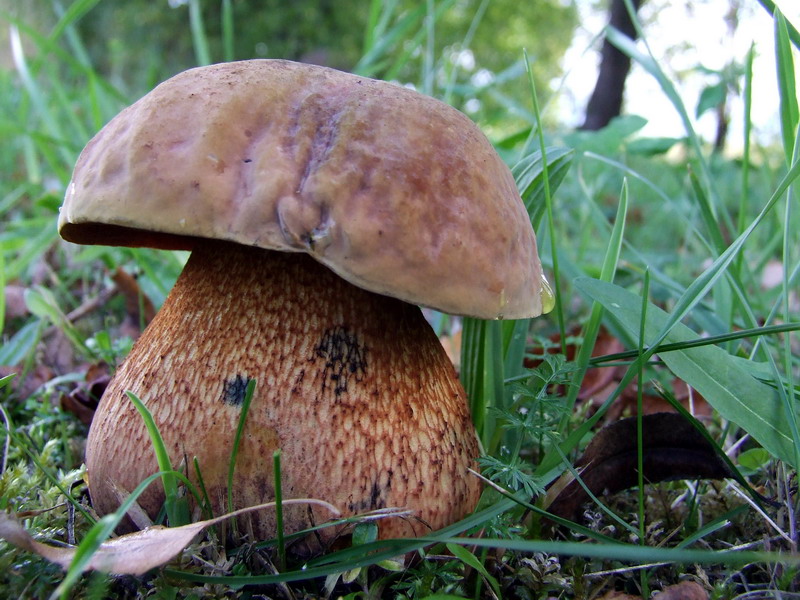
Lurid Bolete (Suillellus luridus)

Boletusluriduswildfoodism

Credit: Tomas Čekanavičius

The Lurid Bolete is a blue-staining European bolete species.  Three cases of mild intoxication have been reported when combining the lurid bolete with alcohol, though unlike the Tippler’s Bane, the main toxin has not been identified (9).

Morels (Morchella spp.)

MorchellaAngusticeps2017

Is there any mushroom more desirable than the Morel?  They’re delicious, nutritious, and medicinal, and while they are considered some of the safest edible mushrooms to identify, there have been reports that eating cooked Morels while imbibing alcohol can produce gastrointestinal distress in some individuals (10).

Few, if any, studies exist regarding this subject, and the exact mechanism of intoxication has not been identified.

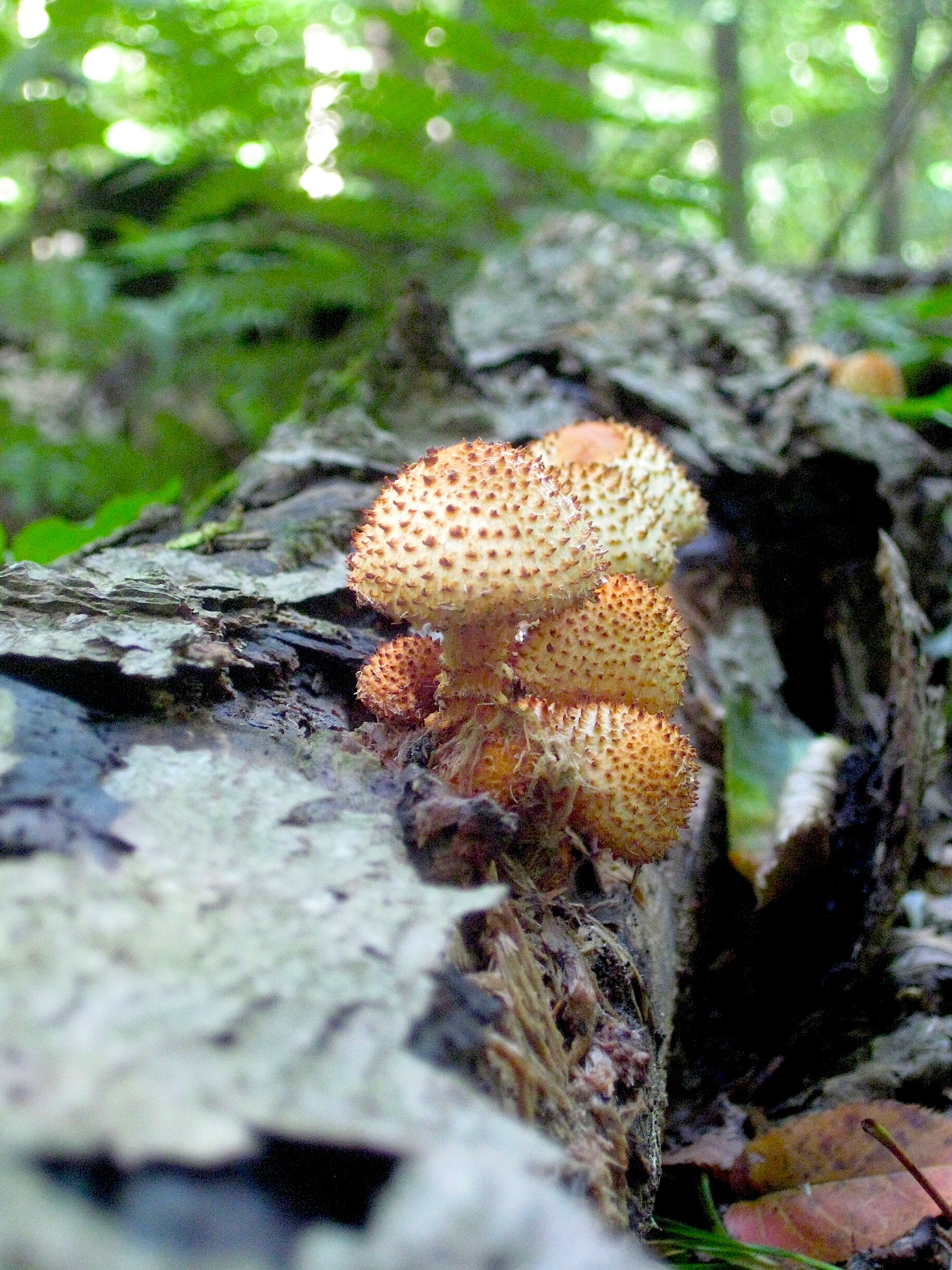
Scaly Pholiota (Pholiota squarrosa)

pholiotasquarrosawildfoodism

The scaly Pholiota is commonly found in clusters on logs, stumps, and at the bases of trees.  Unlike the other mushrooms described in this article, the Scaly Pholiota is considered a poisonous mushroom (though some older field guides list it as edible with caution).  When combined with alcohol, this reportedly poisonous mushroom may become even more toxic.  At least three cases of intoxication have been reported when combining the Scaly Pholiota with alcohol, with symptoms including diarrhea, vomiting, and shock (10).

Oyster Mushroom (Pleurotus ostreatus)

Pleurotusostreatus2018-10

The Oyster Mushroom is a choice edible that can be found year round growing on wood throughout North America.  According to the North American Mycological Association, the Oyster Mushroom may produce unpleasant side effects in some individuals when consumed with alcohol (11).  I have not been able to find any additional research on this subject.

Honey Mushroom (Armillaria spp.)

honeymushroomwildfoodism

Armillaria is a genus that comprises over 30 species of wood-decaying fungi. These species are primarily recognized for their association with root rot of woody plants, but they are also important decomposers within many forested environments.

According to the North American Mycological Association, Armillaria species may produce unpleasant side effects in some individuals when consumed with alcohol (11).  The exact mechanism has not been identified.

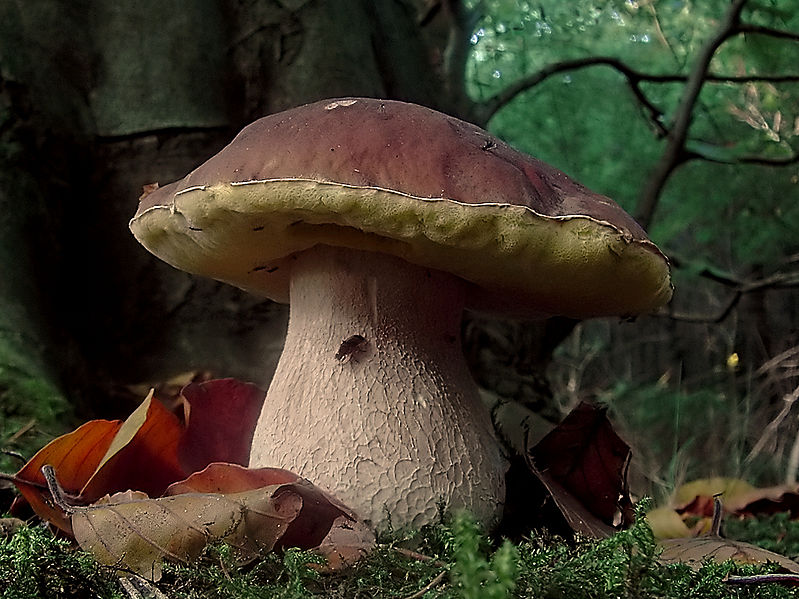
King Bolete (Boletus edulis)

boletuseduliswildfoodism

Credit: Hans Hillewaert

A prized edible mushroom, the King Bolete has been shown (in extremely rare instances) to cause ill effects when consumed with alcohol (11, 12).  Any mechanism has not been identified.

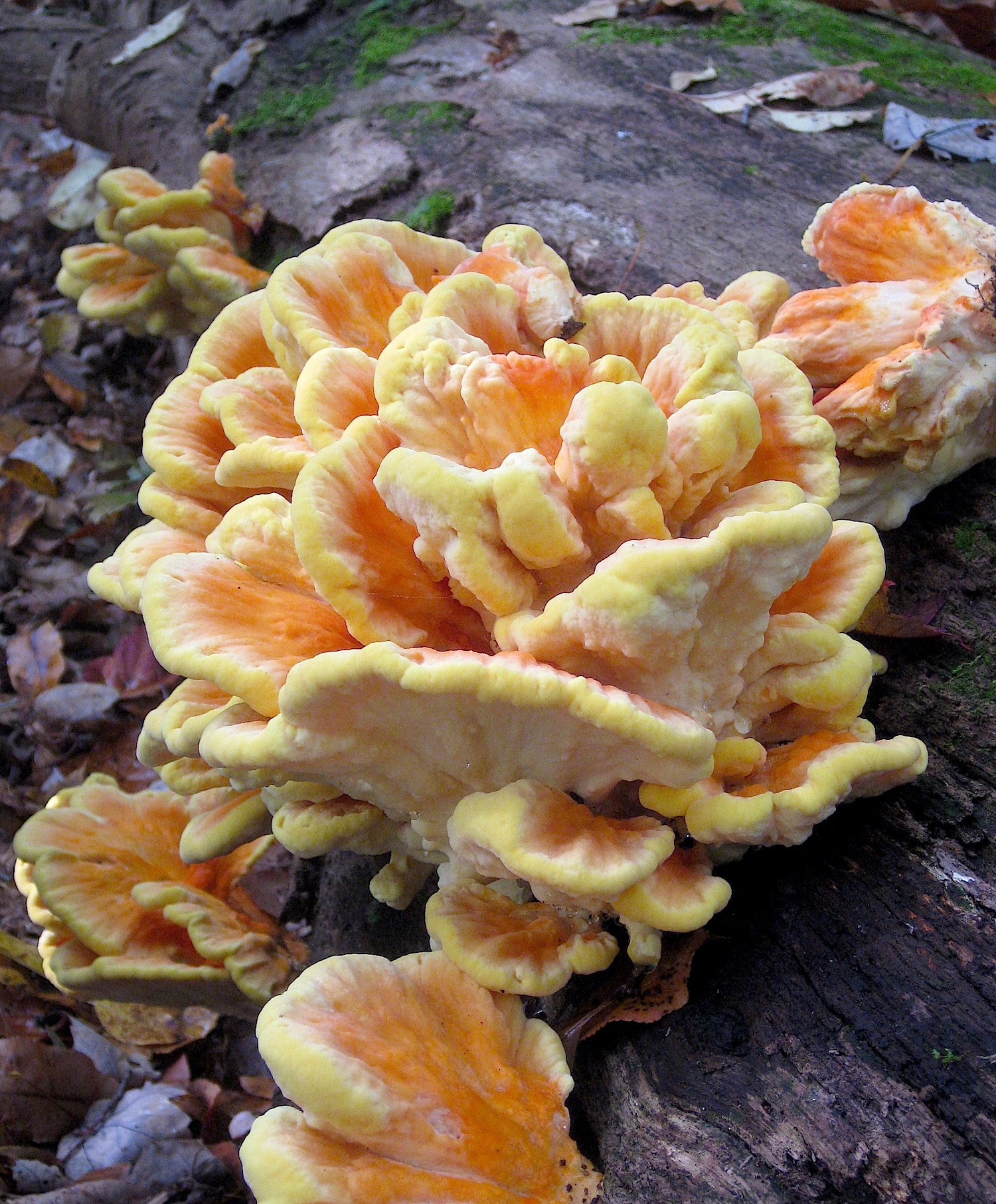
Chicken Mushroom (Laetiporus sulphureus)

chickenofthewoodswildfoodism2

Wait a second, what’s going on here?  Another prized edible mushroom best to be avoided while engaging in adult beverage consumption?  Well, before you start throwing puffballs at me, consider that most of the information on this subject is anecdotal, and no mechanism has been identified.  The Chicken Mushroom, combined with alcohol ingestion, seems only to be an issue in rare instances (10).


Phew.  I’ll stop there before I create any more teetotalers.  Or before you call me out for spreading “mycophobia.”  I would never do such a thing.

Looking back, however, we do have quite a few fungi that unquestionably may produce undesirable side effects when consumed with alcohol.

Now, I understand that an infinite amount of exceptions exist.  Hopefully, you understand this too.

Not everyone will react the same way; some may be hit harder than others, and some won’t feel a thing.  This information is simply provided to help you make responsible and conscious decisions when foraging and consuming wild mushrooms.

And I’ll end this post the way I end most of my mushroom posts:  always be 100% sure of a mushroom’s identity before ingesting it in any form.  There are numerous field guides, online forums, mycological clubs, and experts available to help you in your mushrooming quest.  Use them all, they’re great!

Thanks for reading, and as always… happy foraging!

Additional references:
1. Gry, J. and Andersson, C. (2014). Mushrooms traded as food Vol II Sec. 2. Copenhagen: Nordic Council Of Ministers.
6. Arora, D. (1986). Mushrooms demystified. Berkeley: Ten Speed Press.
10. Ammirati, J. (1985). Poisonous mushrooms of the northern United States and Canada. Minneapolis:  University of Minnesota Press.


Like what you’ve read?  Sign up below to receive notifications for new posts, and don’t forget to check out the Facebook (facebook.com/learnyourland) to learn more about wild food nutrition and identification!

Thank you!
Adam Haritan
Everyday Is A Day To Vote “Yes”

rickettsglenwildfoodismWell, today is the “day” to vote. Apparently today only, though. Yesterday was too early, tomorrow is too late.

The way I see it is this: every action we take … on a daily basis … casts a vote on our behalf. For example, every time we buy and eat organic, we are voting “Yes” to a world that values healthy humans, organisms, and ecosystems over a society that literally (yes, literally) poisons its food supply, poisons its soil, and ultimately creates the diseases it works so hard to cure (we’ll keep racing). Is it any surprise that a large body of evidence supports the causation of various diseases (e.g. birth defects, cancers) and other health effects (e.g. neurotoxicity, endocrine disruption, kidney and liver damage) by exposure to pesticides (1)?

Who would willingly vote for that?

Every time we engage with the natural world, acknowledge its myriad roles, and appreciate its gifts, we are voting “Yes” to nature’s existence, its longevity, and its health, and we are voting “No” to the allowance of myopically-dazed industries to force their way in, disfigure the land, make a quick buck, and deem it all “progress.” According to the World Resources Institute, more than 80% of the Earth’s forests already have been destroyed.

…Progress?

Who would willingly vote for that?

Why reserve your vote for only one day out of the year? Voting can be an admirable act, for sure, and instead of proclaiming to everyone that you voted only today, let others know through your actions that your whole life is a constant, consistent, and never-ending vote for all things life-promoting and sustainable.

First week of November or not, I’ll be voting for that!


Like what you’ve read?  Sign up below to receive notifications for new posts, and don’t forget to check out the Facebook page (facebook.com/wildfoodism) to learn more about wild food nutrition and identification!

Thank you!
Adam Haritan

adamheadshot3

signinformwildfoodism

Is This Chaga? A Key For Identifying This Remarkable Fungus

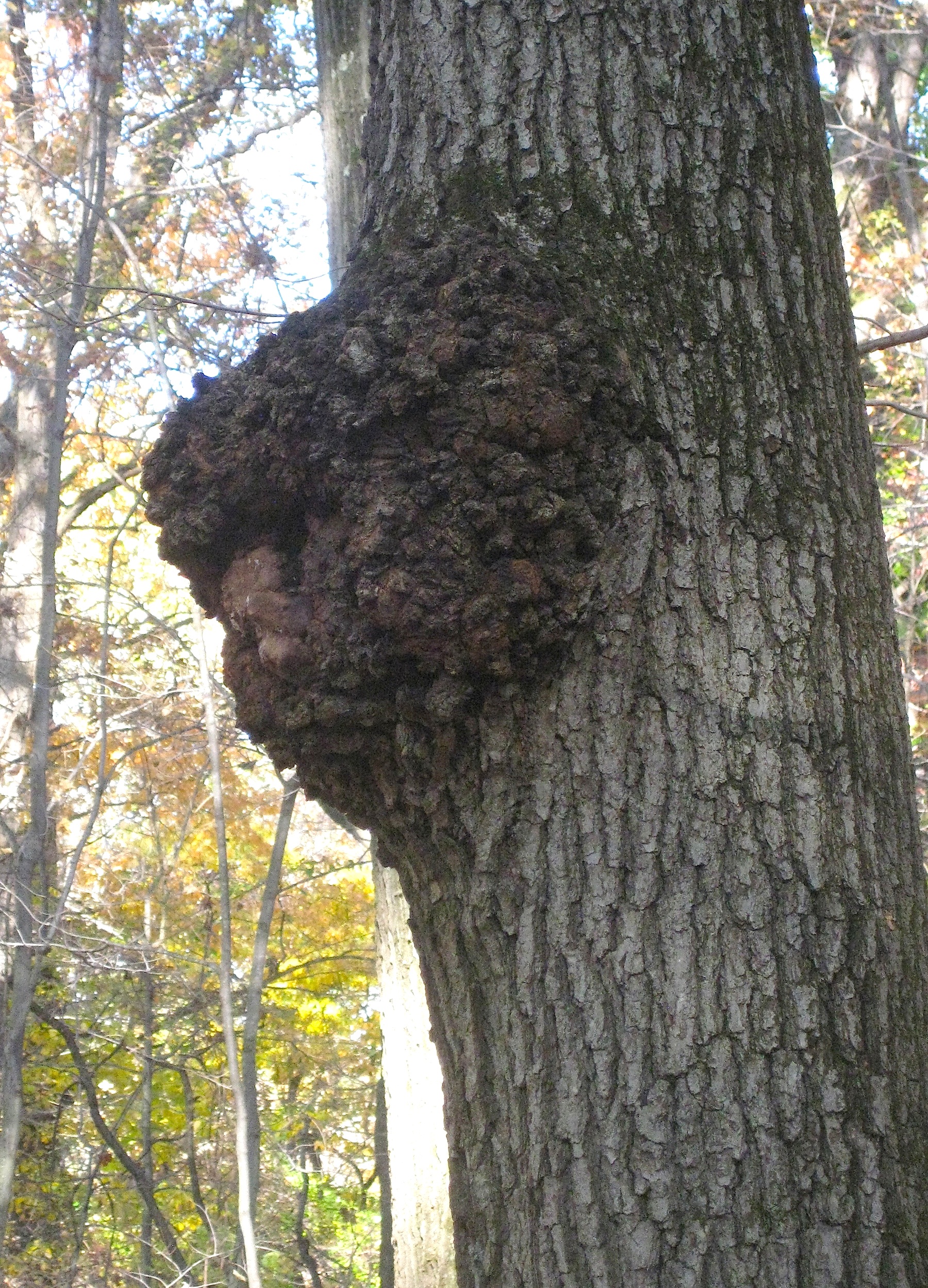
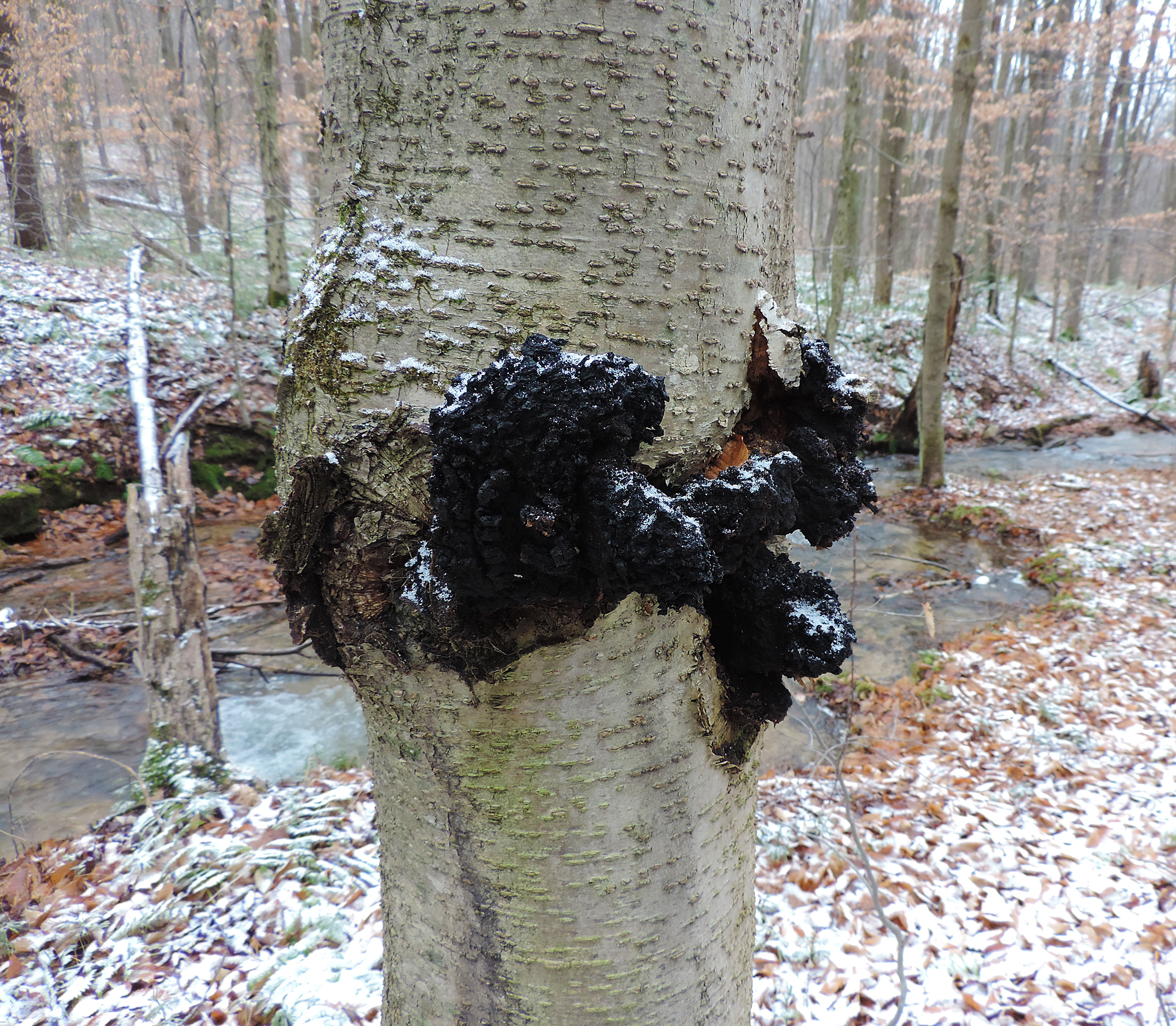
isthischagannowildfoodismThis is a fairly common question I receive, usually accompanied by a picture similar to the one shown here.  It’s a good question indeed, and it’s one that I would like to explore beyond a simple “Yes” or “No” answer (spoiler alert:  the answer is “No”).

In my early mushrooming days, it was the chaga fungus that had me most excited (don’t get me wrong, I’m still bedazzled).  I remember exploring the hardwood forests near Pittsburgh (not exactly an ideal habitat for chaga) in search of this medicinal marvel, and discovering what I thought were potential candidates.  I’d perceive one far in the distance and immediately scurry to the spot.  Standing under the darkened mass, hoping my search yielded success, I’d wonder, “Is this chaga?”

It wasn’t.

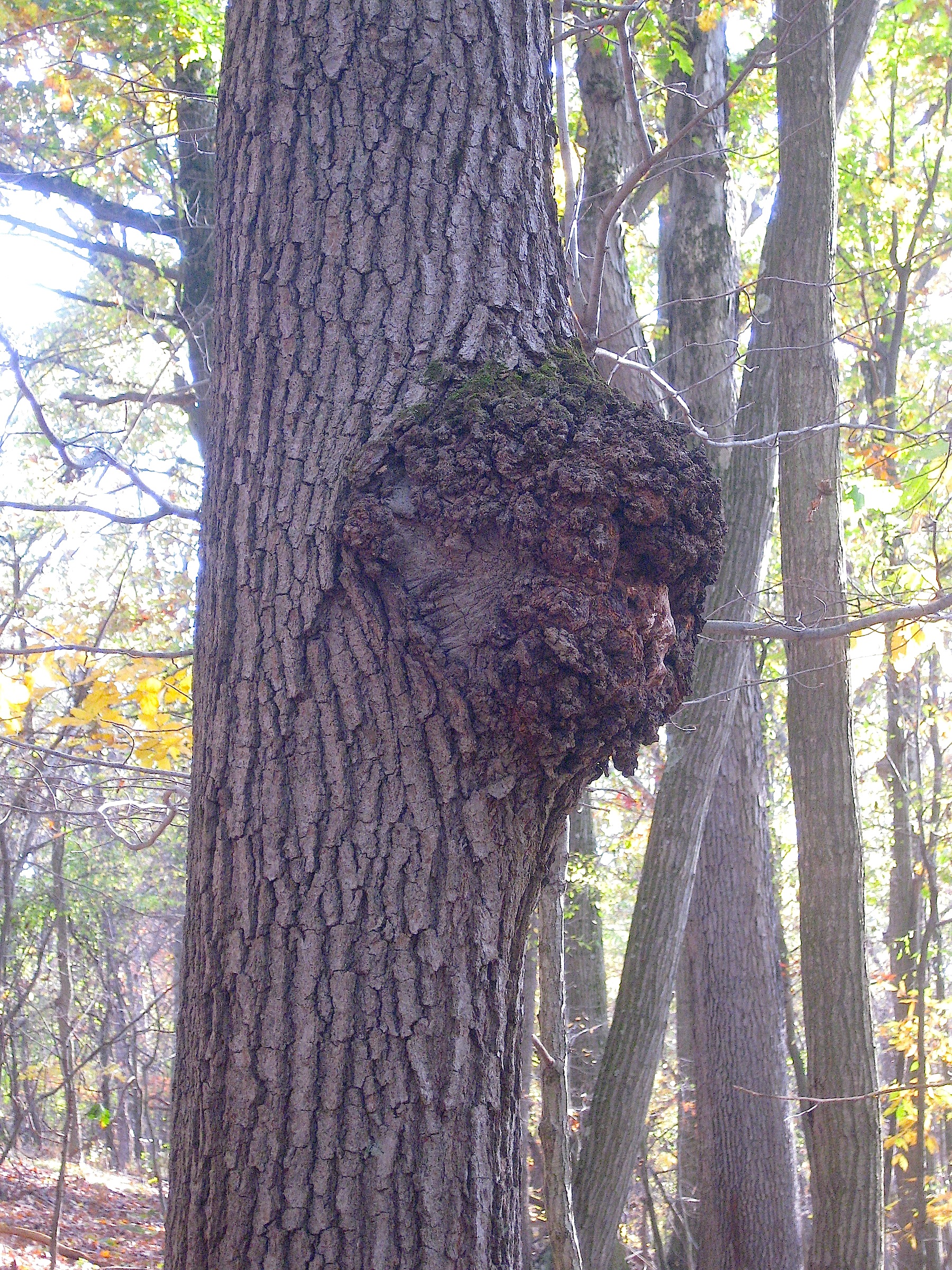
Rather, the abnormal growth that had myself (and countless others, judging by requests on identification forums) fooled was a tree burl resembling the one pictured above.  Through the years, my mushrooming skills have improved to the point where no confusion remains on this matter.  I have encountered chaga dozens of times during my hikes through the forests of Pennsylvania, I have harvested it on numerous occasions, and I use the fungus as part of my primary medicinal strategy.

Still, there are many individuals who may find it confusing to discern between the two, and I understand.  They kinda-sorta look like one another.

To answer the original question proposed in this article’s title, I’d like to further explore the differences, both superficially and functionally, between tree burls and the chaga mushroom.

Tree burl

treeburlwildfoodism

Sorry, not chaga.

A burl is an outward growth on a tree usually attributed to environmental stress, whether it be physical trauma, an insect, fungus, or even pollutants.  Burls can be made up of numerous buds that would typically develop into new shoots, but instead they remain dormant.

Whatever their true cause, burls are not inherently detrimental to the tree.  Rather, as trees mature, so do their burls, which develop beautiful patterns and colors that are prized by furniture makers and wood turners.

Unfortunately, burl poaching is a common practice especially in the old growth redwood forests, where burls are illegally harvested and sold for large profits.  Harvesting burls from living trees can leave the trees more susceptible to infection and disease, though in many cases the tress are able to heal themselves.

It’s important to understand that a burl is not a fungus, while chaga is.  A burl is simply an outgrowth of the tree, meaning the tree’s bark extends to include the burl.  The two are not necessarily separate entities.

While the colors may vary depending on the species, burls are usually the same color, if not a bit darker, than the color of its tree.  Contrast this to chaga, which usually forms as a blackened crust (on its outside), and appears as a distinct entity on its host tree.

While burls can form on numerous tree species, I encounter them most frequently on oak trees (Quercus spp.) in Western Pennsylvania.

Chaga (Inonotus obliquus)

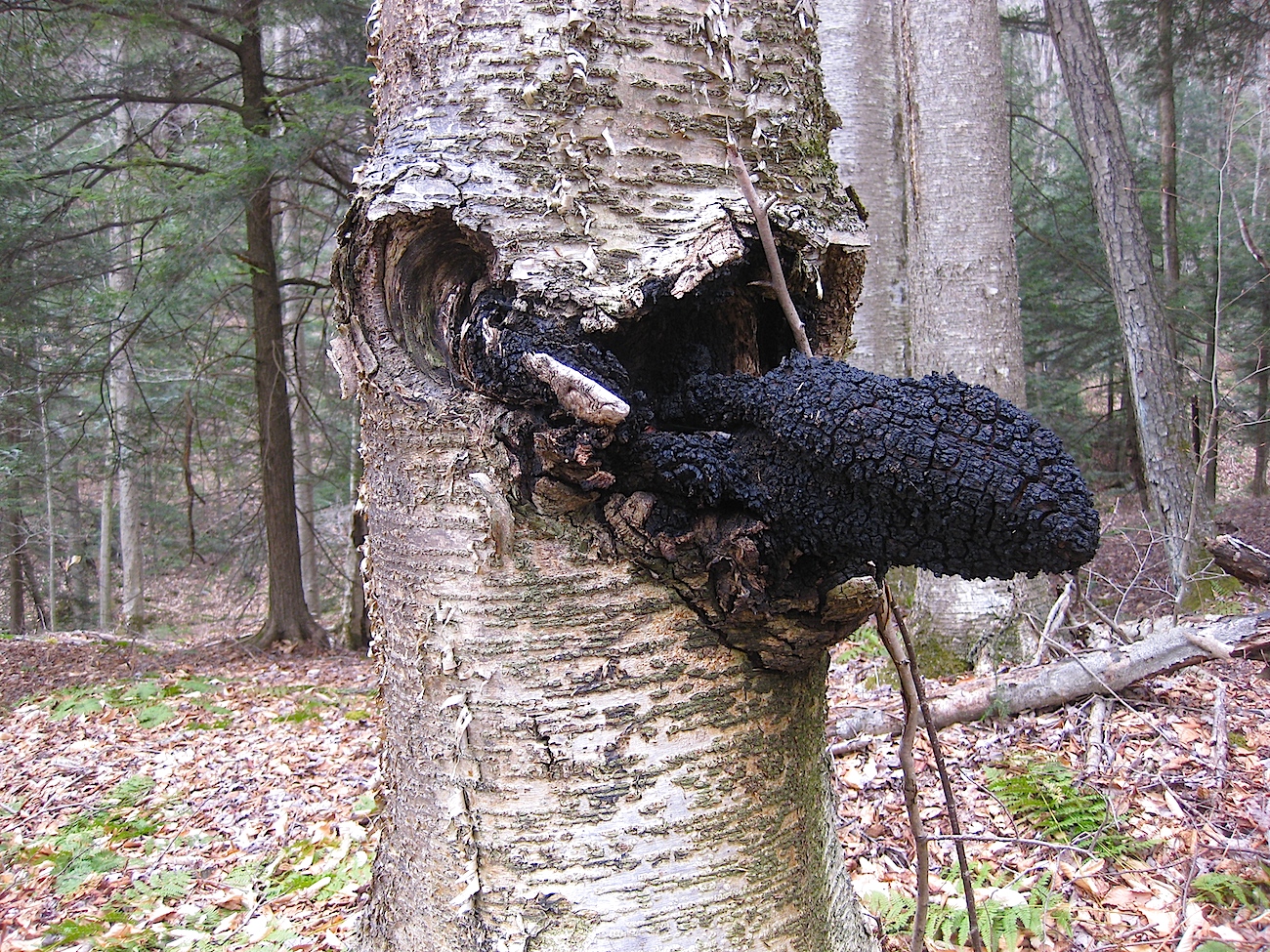
chagaANFwildfoodism

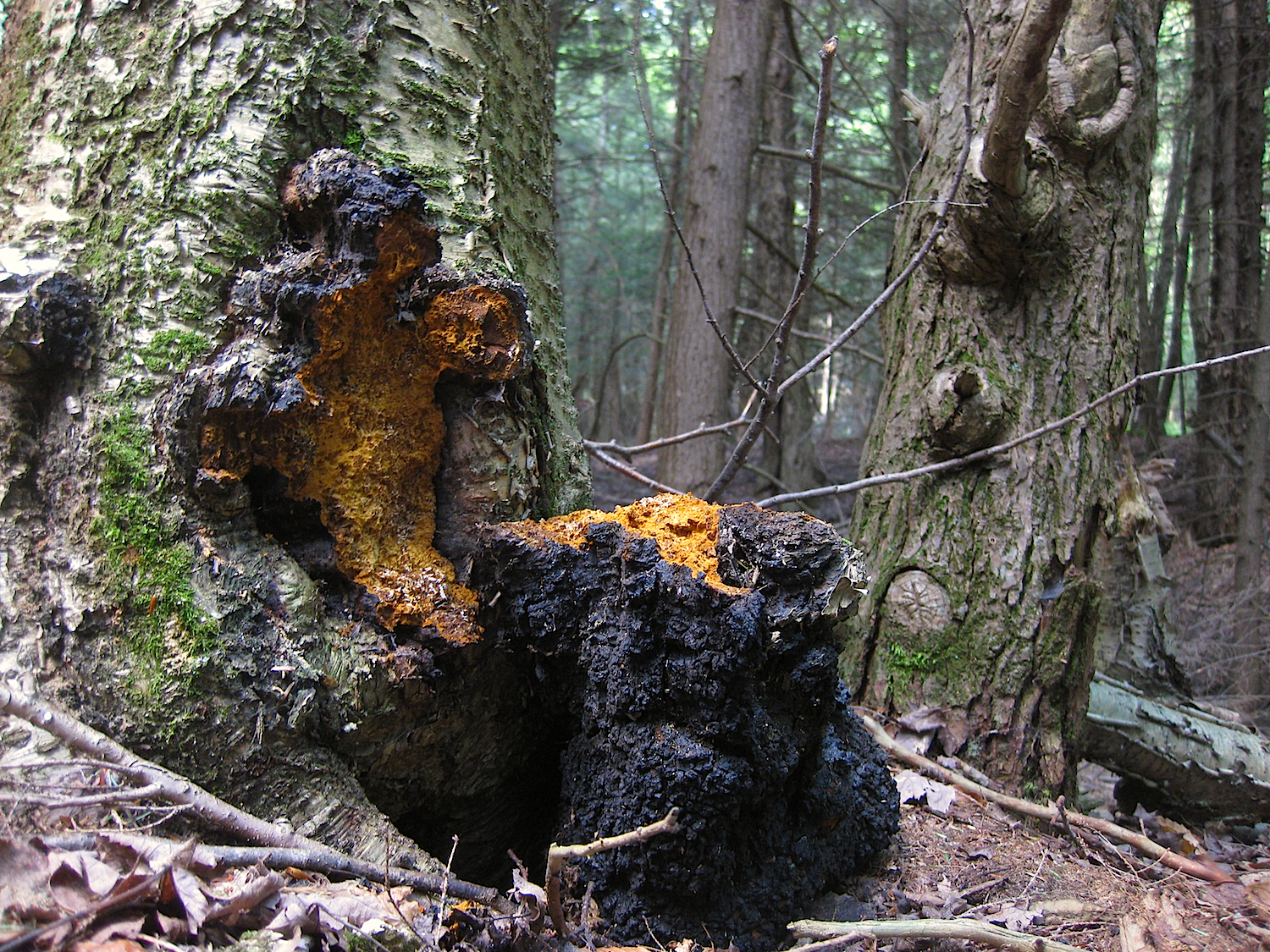
Yes, this is chaga.

Upon first glance, it’s hard to imagine that this fungus would serve any purpose in benefiting human health.  Centuries of traditional use and current research, however, suppress that skepticism, if only by a little.

Chaga is a sterile fungal body usually found on birch trees, though also rarely found on elm, beech, and hornbeam.  Its outer material is usually black, brittle, and cracked, while its interior is golden-orange and cork-like.

chaga2hr2015

Note the black, cracked outer appearance and the orange interior (visible at its point of attachment to the tree).

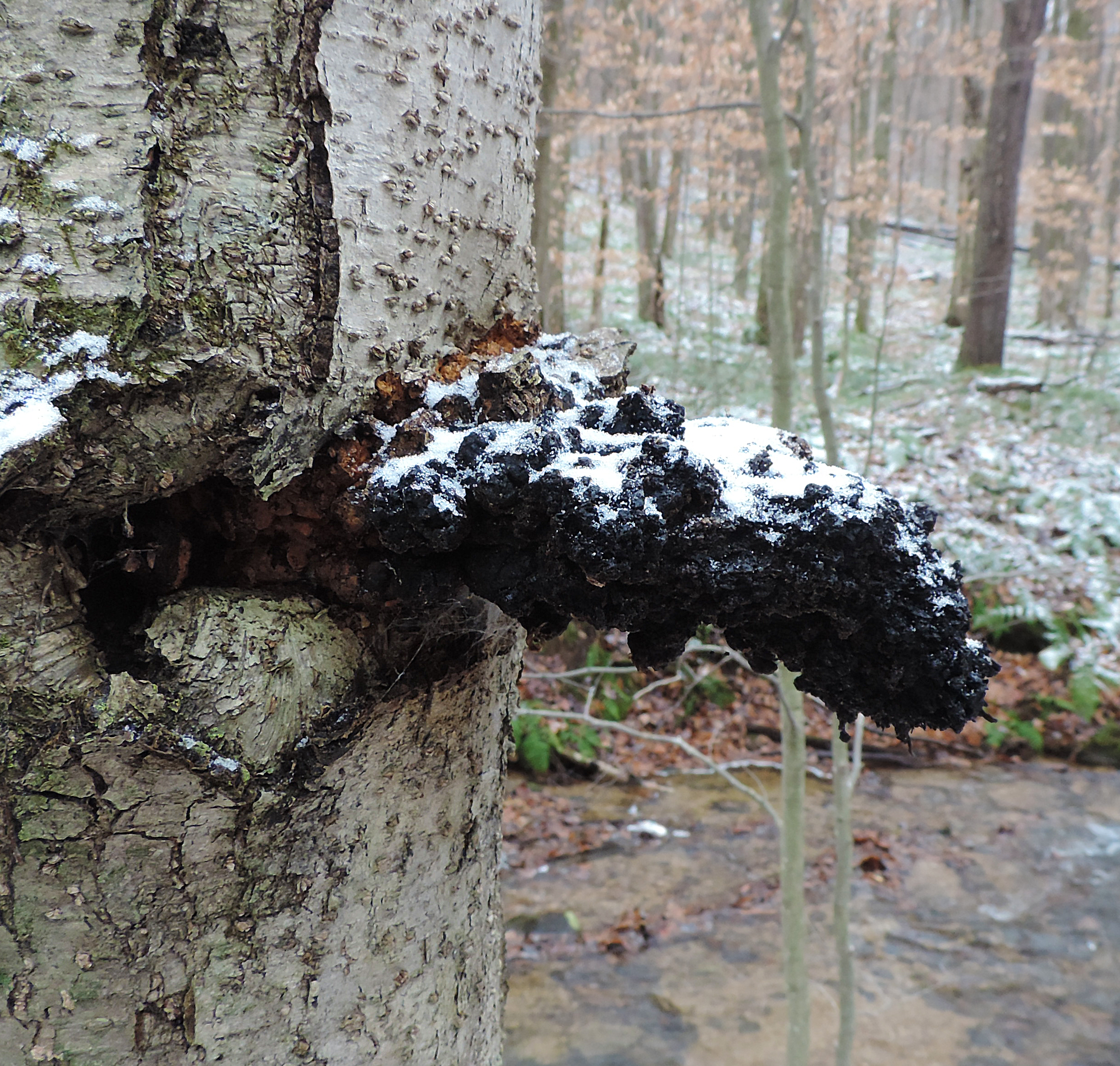
Chaga forms over several years within the tree and eventually erupts through the bark, pushing itself out from within.  Thus, it is a distinct species from its host tree, and appears as such.

chagahr2015

Notice how distinct chaga looks from its host tree (a yellow birch, Betula alleghaniensis).

To distinguish chaga from a tree burl, ask yourself these questions:

  • Is this the right ecosystem for chaga?  Chaga usually grows in the circumpolar boreal deciduous forests.
  • On which tree is it growing?  Chaga grows almost exclusively on birch, though as stated previously, it has been found rarely on elm, beech, and hornbeam.
  • What color is it?  The outer surface of chaga is cracked, brittle, and relatively black (if not rather dark).  A tree burl’s color resembles its host tree, perhaps a bit darker.
  • What color is the interior?  I don’t recommend haphazardly damaging formations on trees, though sometimes the interior color can be seen naturally without any effort, or simply by removing a small piece by hand.  The interior of chaga is an unmistakable golden-orange color (see image below).
  • Does the specimen appear to be a separate species, distinct from its host tree?  If so, it may be chaga.  If the specimen appears to be an extension of the tree, bark and all, you may be looking at a burl.
  • Is the growth phallic in nature, or rounded?  Chaga usually grows as a phallic, cone-like extension.  Tree burls are generally rounded outgrowths.  These are shape generalizations for both, as appearances can vary widely, though the majority of chaga fungi and tree burls I’ve seen fit these characteristics.
chagawildfoodism2

Note the orange interior amadou of chaga — corky to the touch when fresh.

Having run through these questions, you can feel more confident in your identification of the chaga fungus.  If you still harbor some confusion, feel free to send me a photograph and description of your unknown specimen, and I will be happy to assist in identification.

And oh yes, one final note:  chaga fungi and tree burls are remarkable sights to view in nature, though both are prone to over-harvesting.  Medicine can be made from chaga, and intricate woodwork can be produced from burls.  If harvesting either, do so with the utmost intention while inflicting the least amount of harm.  It makes the world a better place for everyone!

Thanks for reading, and as always … happy foraging!


Let’s stay in touch!  To receive information from Adam Haritan on wild plant and mushroom identification, please enter your name and email address below.  Thank you!

LearnYourLandnewsletter

Additionally, don’t forget to check out the Facebook and Instagram pages to learn more about wild food nutrition and identification!

Adam Haritan

AdamReishi2017

5 Easy-To-Identify Edible Mushrooms For The Beginning Mushroom Hunter

chickenofthewoodswildfoodism2In the world of foraging, few organisms conjure up fear and mystery more than mushrooms.  Tell someone you harvest wild berries, and he thinks to himself what a great hobby.  Tell another person you hunt wild mushrooms, and she fears for your life.

“Aren’t you scared?”

“What if it’s poisonous?”

“I could never pick wild mushrooms, they’re much too dangerous.”

The fungal kingdom, it seems, is a bit of an enigma.  In 1991, a paper was published suggesting that, although 1.5 million fungi were thought to have inhabited the earth, only about 70,000, or 4.7%, of fungal organisms were identified at that time (1).  Today, it is estimated that there are 5.1 million fungal species in existence, and the number of identified species is still quite small in comparison.

It’s true, out of 5.1 million fungal species, some of them are quite toxic.  Destroying Angel, Deadly Galerina, and Death Cap aren’t just fancy names, though they may or may not be hit singles from late 80’s heavy metal bands…

Destroyingangelwildfoodism

Amatoxin, forever popularized by their hit single, “Destroying Angel”

It’s easy to focus all our attention on the dangers of wild mushroom hunting, and of course the risks are valid concerns.  One must absolutely know what he or she has in hand before even thinking about pulling out the butter, salt, and frying pan.

There is another side to wild mushroom hunting, however.  The medicinal side.  The healing side.  The delicious side.

Obviously, several mushrooms are edible.  A quick trip to the grocery store confirms this.  Many individuals are interested in going one step further by foraging edible mushrooms, yet have no idea where to start.  It can all appear quite daunting at first, especially after realizing you’re dealing with 5.1 million potential species (okay, this is an exaggeration; much of this large number does not pertain to mushrooms in their fruiting body stages, but rather to microscopic fungi, such as yeasts and molds).

So where do we start?

Well, why don’t we begin with the most easily identifiable wild edible mushrooms?  You know, the ones that when you see them you think, “Yep, that’s exactly it!”

In this post, I have put together a list of 5 easy-to-identify edible mushrooms.  These mushrooms are fairly conspicuous, they’re delicious, and they require a hefty stretch of the imagination to misidentify as toxic look-alikes.

Note:  I live in western Pennsylvania.  This list, therefore, is based on my experiences with the organisms in this area.

1. Lion’s Mane (Hericium erinaceus)

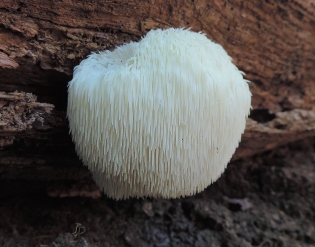
lionsmanelearnyourland2016

Not all mushrooms look like the portobellos and the shiitakes found in the grocery store.  Lion’s Mane, for one, certainly does not.  It is one of the most unique-looking mushrooms, with its unbranched body of icicle-like spines and soft white tissue.  Accordingly, Lion’s Mane is a great mushroom for beginning mushroom hunters.

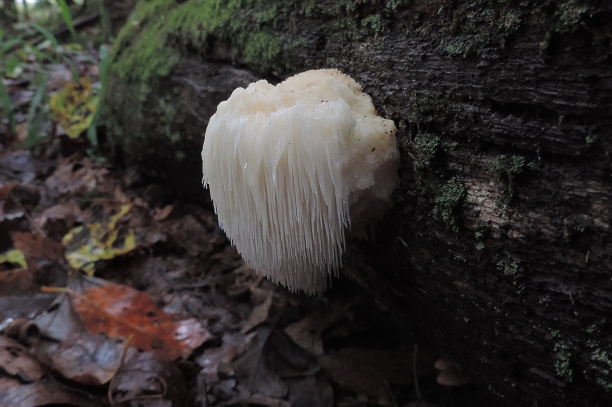
The fruiting body of Lion’s Mane consists of an unbranched, cushiony, water-rich mass that is between 3-10” wide and typically the same size tall.  Lion’s Mane is the only Hericium species in eastern North America that is unbranched.  The fruiting body of Lion’s Mane consists of numerous, icicle-like spines (“teeth”) that point downward and taper to a point. Each spine is soft and typically half-an-inch to 2 inches in length. These spines are white when young and yellowish when older.

LionsMane2018-2

The spore color produced by Lion’s Mane is white.

Very few mushrooms resemble Lion’s Mane, and the ones that do are taxonomically placed in the same genus (Hericium).  These include Bear’s Head (H. abietis), Coral Tooth (H. coralloides), and Bear’s Head Tooth (H. americanum), among others.  What distinguishes Lion’s Mane from its relatives are its long spines (1-4 cm long) and unbranched fruiting body.  All species of Hericium are considered to be edible.

Also known as the Pom-Pom mushroom, Lion’s Mane is one of the most delectable mushrooms in the fungal kingdom, resembling crab meat in taste and texture.  Additionally, Lion’s Mane has been well researched for its role in improving cognitive health, producing neuro-regenerative effects in numerous studies (2, 3, 4).

Look for Lion’s Mane on the wounds of living hardwood trees, such as oaks and maples, as well as on recently felled trees.  It can be found in the summer months through autumn.

2. Chicken Of The Woods (Laetiporus sulphureus)

chickmushroomnorthparklearnyourland

While Lion’s Mane is one of the easiest mushrooms to identify, its presence is a bit more rare than some of the other choice edibles.  Take Chicken Of The Woods, for example.  Once you develop a search image for this fungus, you’ll start seeing it everywhere (okay, maybe not on Mount Kilimanjaro, but you get my point).

Chicken Of The Woods (also known as the Chicken Mushroom or Sulphur Shelf) grows in clusters on both standing and downed trees, emerging as knob-like growths and soon developing into numerous shelves.

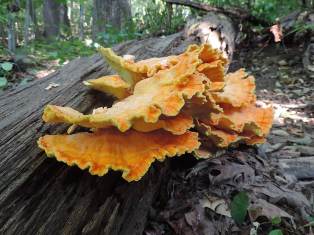
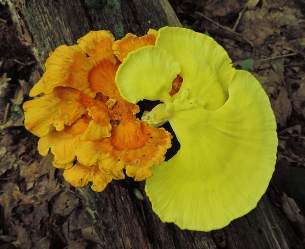
Each individual cap can be up to 12” wide, though oftentimes you’ll find individual caps that are much larger than this.  The top of the mushroom is typically smooth and faintly wrinkled, and when fresh, its color is bright orange to yellowish orange (sometimes with a bright yellow margin).

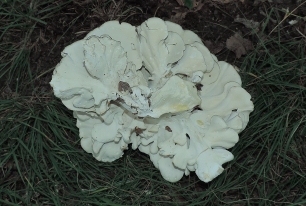
With age, the caps of this mushroom will fade and turn whitish and become very crumbly. However, if you find Chicken Of The Woods at this stage, check that spot again in a few months or next year, because this mushroom tends to fruit multiple times on the same log or tree.

Chicken Of The Woods is a polypore mushroom because its fertile surface (underside) contains numerous pores from where the spores are dispersed. This means that there are no gills on the underside of Chicken Of the Woods, and there will never be gills on the underside. This mushroom always contains a pore surface with very tiny pores.

chickenofthewoodsNP2016

In this particular species, Laetiporus sulphureus, the pore surface is bright yellow when fresh, though this color will fade with age.

Note:  The closely related L. cincinnatus contains a peachish-orange cap and a whitish-peachish pore surface.  It, too, is edible.

The spore print produced by Chicken Of The Woods is white.

The texture of cooked Chicken Of The Woods resembles… get this… chicken, and this mushroom is best collected when young.  As it ages, this mushroom becomes too tough to eat, though the outer edges can still be salvaged and used in dishes.  Like all wild mushrooms, it requires cooking before consumption.

Beyond edibility, Chicken Of The Woods is medicinal as well.  Research has shown that an extract from this mushroom possesses antimicrobial activity against the pathogen, Aspergillus flavus (5). Chicken Of The Woods is also a great source of antioxidants, including quercetin, kaempferol, caffeic acid, and chlorogenic acid (6), and it contains lanostanoids – molecules that have the ability to inhibit cancerous growths (7). What more could you ask for from a humble saprophyte?

Look for Chicken Of The Woods in the summer months through autumn.  To learn more about this fantastic fungus, I encourage you to check out a video I created on its identification, look-alikes, medicinal benefits, and more.

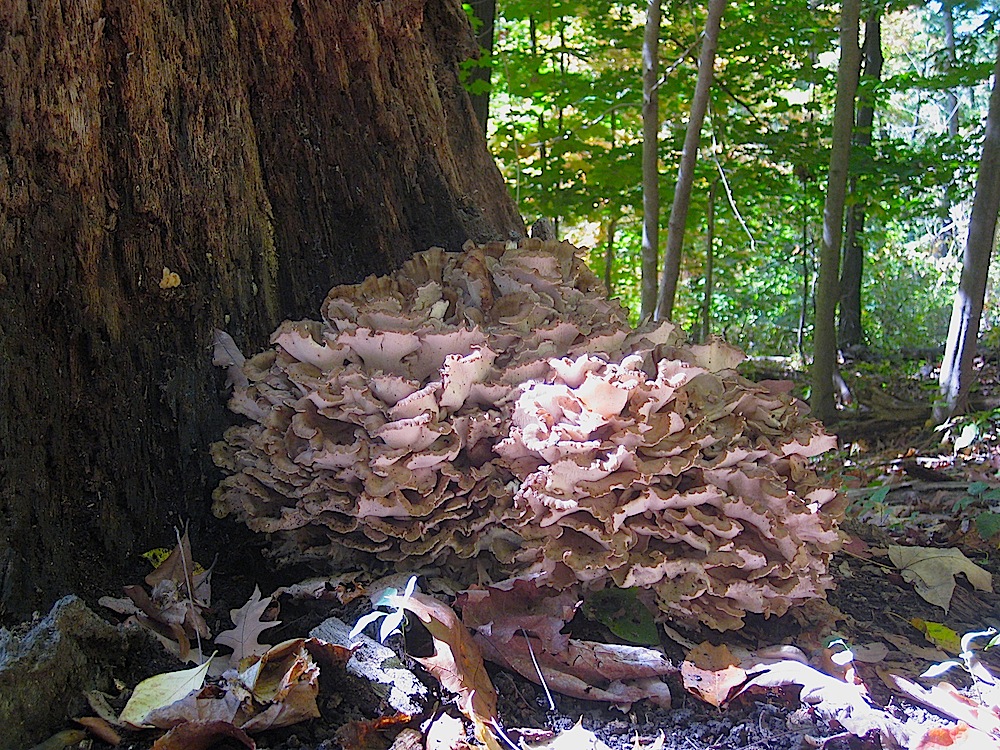
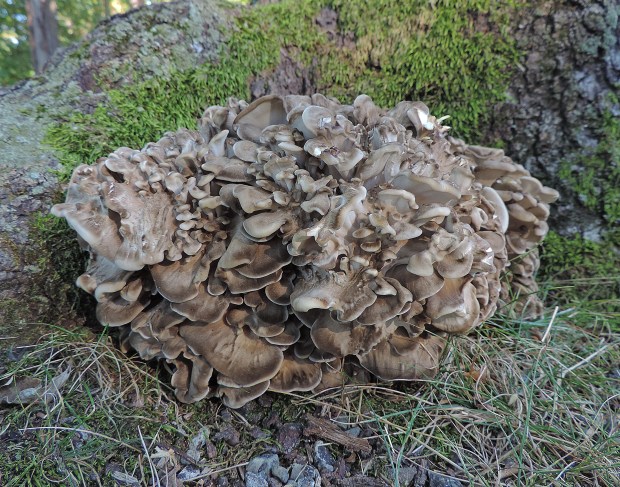
3. Hen Of The Woods / Maitake (Grifola frondosa)

maitakenp2016

The Maitake mushroom (also known as Sheep’s Head or Hen Of The Woods) is a choice edible and medicinal that always demands a good hunt.  While it’s easy to identify and widely distributed, Maitake can be somewhat tricky to locate compared to the showy Chicken Of The Woods, as the former blends in well with the autumnal foliage.

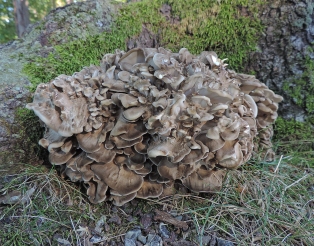
Maitake contains overlapping gray to brown caps attached to a single base.  Each cap is between 1-3” wide and typically fan-shaped and fleshy (not woody like you’ll see in other polypores).

Underneath each cap is a pore surface containing numerous tiny pores.  There are no gills on the Maitake mushroom… just a pore surface. The pore surface is whitish or light gray in color, and these pores do not bruise when handled or scratched.

GrifolafrondosaUnderside

The spore print produced by the Maitake mushroom is white.

While not difficult to identify, Maitake may resemble other non-toxic polypores.  The Black Staining Polypore (Meripilus sumstinei) bruises black and can be found growing on buried wood.  Young specimens are edible, though they become too tough to consume with age.  The Umbrella Polypore (Polyporus umbellatus) is another edible look-alike which contains white to grayish caps, though this mushroom is multi-branched and not as common.

Maitake compliments a variety of dishes, lending a hearty flavor and tender texture.  In addition to its use as a food, Maitake has been researched extensively for its medicinal properties, specifically in the areas of cancer and diabetes.

Maitake, with few look-alikes, is certainly one of the safest mushrooms to harvest.  Look for this gem under oak trees (and make sure you circle the tree … you may be pleasantly surprised to find a second or third), late summer through autumn.

To learn more about the Maitake mushroom, I encourage you to check out this video I created on its identification, health benefits, and more!

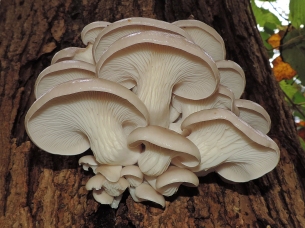
4. Oyster Mushroom (Pleurotus ostreatus)

Pleurotusostreatus2018-10

Oyster mushrooms are popular amongst both mushroom hunters and cultivators.  To positively identify Oysters, one only needs to visit a grocery store and observe these mushrooms in bins or clamshells.

Still, many features ought to be noted before harvesting Oyster mushrooms in the wild, and once learned, you’ll have easy access to wild fare many months of the year.

Oyster mushrooms are edible fungi that grow in overlapping clusters on wood… usually on hardwood logs, stumps, and standing dead trees.  Rarely will you see this particular species, Pleurotus ostreatus, decomposing conifer wood… though it is possible.

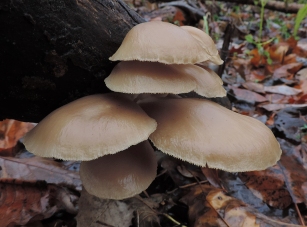
Each cap is typically between 3-8” wide and shaped like an oyster.  While many Oyster mushroom species are white, Pleurotus ostreatus can be cream-colored and even grayish-brownish in color.

Pleurotusostreatus2018-11

The underside contains whitish gills that become yellowish in age. A key feature of Pleurotus ostreatus is that its gills are decurrent; in other words, the gills run the complete length of the cap and down the stalk.

The spore print of Pleurotus ostreatus is pale-lilac to whitish.

Pleurotus ostreatus is unique in that it tends to grow in the colder months of the year —  mid-autumn, all the way through winter, and even into early spring. If you’re finding an Oyster mushroom during these colder months, and its color is tannish, grayish, or brownish… there’s a good chance you’re looking at Pleurotus ostreatus.

To learn more about oyster mushrooms, check out this video in which I discuss identification, medicinal benefits, and more.

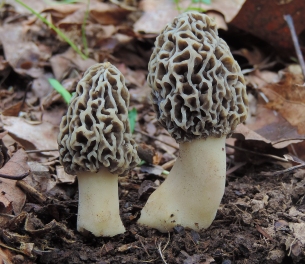
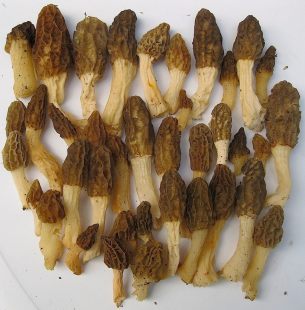
5. Morels (Morchella sp.)

MorchellaMorel2018

Morels (genus Morchella) are among the most prized of all wild mushrooms.  Every year, countless mycophiles scour the woods in search of these tasty, elusive fungi.

Mushrooms within the Morchella genus belong to one of 3 groups (“clades”):

  • Black clade (elata)
  • Yellow clade (esculenta)
  • Rufobrunnea clade (which currently contains the species Morchella rufobrunnea, a Morel that appears in woodchips and landscaping settings on the West Coast from California to Seattle.)

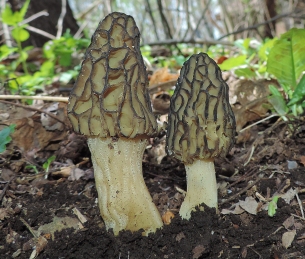
Black Morels (in the elata clade) typically appear first.  Depending on where you live, you might see Black Morels in March.  These mushrooms grow terestrially underneath a variety of trees, including ash, sycamore, aspen, and coniferous trees, and are most commonly found in Northern and Western North America (though they certainly do grow in Eastern North America).  Disturbed areas are good places to look, including campgrounds, along roads, and in logged areas.

MorchellaAngusticeps2017

Black Morels can be found in burned areas as well, especially 1 to 2 years after the occurrence of a forest fire. Additionally, wetland areas can be conducive to Black Morel mushroom fruitings, especially in lowlands containing sycamore and cottonwood trees.

Yellow Morels (in the esculenta clade) are more common in Eastern North America and in the Midwest (though they do grow in Western North America). They grow near a variety of hardwood trees, including tulip poplar, ash, and dead or dying elm trees. Older apple orchards are also good places to look.

moreltablewildfoodism

Of course, these are generalizations for both groups. Yellow Morels grow in burned areas, too. Black Morels may be found under tulip poplar trees. I have simply narrowed down the descriptions to what is most commonly observed. There will always be outliers.

Regardless of clade, Morels generally demonstrate these physical characteristics:

  • Honeycomb-pitted caps made up of a series of pits and ridges.
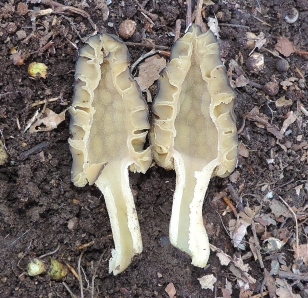
  • Entire mushroom (cap and stem) is hollow from top to bottom.  This feature is easily observed when each mushroom is cut in half lengthwise.

MorelInsideLearnYourLand

These features, once learned, will help you clearly separate “true” Morels from their look-alikes, including false morels, thimble morels, and stinkhorns.  False morels of the genus Gyromitra tend to retain a darker shade of red and have a wrinkled, brain-like, or convoluted cap.  A few mushrooms in the Gyromitra genus are known to be toxic (to a degree).  Thimble morels (Verpa spp.) have free, “skirt-like” sides, and stinkhorns (Phallus spp.) have a sack or volva at the base and are generally quite foul-smelling.

For more information on finding and identifying morel mushrooms, check out a very detailed article on this blog: How To Find And Identify Morel Mushrooms


If I had to include additional easy-to-identify mushrooms, I would extend this list to boletes, chanterelles, puffballs, and shaggy manes.  The ones that made the final cut, however, are those that I have found to be the easiest to identify.  I hardly need to think twice before bringing these delectable fungi home.

The mushrooms that earned their ranking are also the ones that, when taught to other beginning mushroom hunters, are identified with confidence and ease.  If you are just starting on the road to becoming an ardent mushroom hunter, use this list as a guide for helping you along your journey.  Remember, however, that the descriptions here are not complete and are only meant to briefly discern the listed mushrooms from their potential look-alikes.

A good habit (actually, an extremely wise habit) is to cross-reference your mushrooms with other resources, and always be absolutely positive with your identification before ingesting wild mushrooms in any form.  Your safest bet is to have an expert identify, or confirm the identification of, your specimens.  A quick online search will yield local mycologists as well as online forums to assist in the identification process.

There, that eases the fear of wild mushroom hunting just a little bit, wouldn’t ya say?

Thanks for reading, and as always … happy foraging!


Let’s stay in touch!  To receive information from Adam Haritan on wild plant and mushroom identification, please enter your name and email address below.  Thank you!

LearnYourLandnewsletter

Additionally, don’t forget to check out the Facebook and Instagram pages to learn more about wild food nutrition and identification!

Adam Haritan

AdamReishi2017


5 Unique Health Benefits Of The Maitake Mushroom

maitakewildfoodism

Instead of going to the pharmacy for your medicine, venture into the woods behind the building and harvest the real healing wonders of this planet (Maitake, Grifola frondosa, found near Pittsburgh, PA)

Common dietary advice almost always includes some variation of the phrase, “Eat more fruits and vegetables for good health.”  Pick up most diet books, talk to the health professionals, and look at the research:  fruits and vegetables are nutritional superstars.

Less often do we hear the phrase, “Eat more mushrooms for good health,” and if we look at the research, one may wonder why we neglect to include our fungal friends in the dietary limelight.  Perhaps we tend to lump them into the category of vegetables (this is what I was taught to do in my nutrition classes, for example, when creating meal plans), though if we study the biology of mushrooms, they more closely resemble fruits in their reproductive roles.  Or perhaps here in the United States, mushrooms just haven’t found their way into our national cuisine (though edible fungi have been on this continent far longer than bread and boxed cereal).

Whatever the reason, it’s all a bit unfortunate.  Many mushrooms are quite nutritious, and many are medicinal.  I’ve previously written about the nutritional benefits of morel mushrooms, and would now like to explore the world of yet another equally impressive fungal ally.

The maitake mushroom (Grifola frondosa), also known as “sheep’s head” or “hen of the woods,” is a polypore that grows at the bases of oak trees.  In addition to its culinary versatility (one of my favorite choice edibles from the fungal kingdom), the maitake mushroom has been researched extensively for its nutritional and medicinal effects.  Let’s take a look at the research:

Vitamin D

All mushrooms contain a fungal cell membrane molecule known as ergosterol.  Upon UV exposure, this compound is converted into ergocalciferol, or vitamin D2.  Some mushrooms contain more vitamin D2 than others depending on the species, environmental conditions, and post-harvest treatment.  Maitake mushrooms, at 100 grams of fresh material, have been shown to contain more than 2,000 IU of vitamin D2 when exposed to supplementary UV treatment (1).

To increase the vitamin D2 content of your mushrooms, place them gills-side-up under direct sunlight.  Sliced mushrooms will yield even more vitamin D2, as this method increases surface area and allows more ergosterol to be exposed to sunlight (2).

Cancer

There is ample research suggesting that maitake mushrooms may play a role in the protection against various cancers, with one key compound gaining most of the attention.  Known as D-Fraction, this polysaccharide has the ability to enhance certain immune system cells, such as macrophages, helper T cells, and cytotoxic T cells, which all work together to attack tumor cells.

In one clinical trial, D-Fraction was administered to cancer patients without the combined use of conventional therapies.  As a result, metastatic tumor growth slowed down, tumor lab markers decreased, and natural killer cell activity increased (natural killer cells are immune system cells that play a role in inducing tumor cell death).  These results were witnessed in all patients (3).

Other studies have shown that D-Fraction can induce cellular death (a process known as apoptosis) in human breast cancer cells and advanced renal-cell carcinoma cells (4, 5, 6).  Additionally, D-Fraction has been shown to reduce bladder cancer cell growth and has been linked to bladder cancer disease remission (7, 8).

Immune system

For many of the same reasons that maitake may help protect against cancer, it also plays a critical role in supporting immune system health.  Maitake contains important polysaccharides which, as mentioned previously, help to enhance the activity of certain immune system cells, such as T cells, B cells, macrophages, and natural killer cells.  Ultimately, polysaccharides from the maitake mushroom act as immune system regulators (9).

Additionally, many medicinal mushrooms are known for their immunomodulatory effects, and maitake is no exception (10).  Immunomodulation is the process of enhancing, stabilizing, or depressing the immune system depending on circumstances.  For example, stimulating the immune system is necessary in instances of viral or bacterial infection.  Depressing the immune system may be desirable when experiencing the effects of autoimmune diseases.  Beta-glucans from maitake mushrooms have been shown to play a key role in the immunomodulatory process (11).

maitakenp2016

Antioxidants

Oxidation is a natural process in the human body that, if left unchecked, can result in conditions such as atherosclerosis, diabetes, and Alzheimer’s disease (just to name a few).  Antioxidants combat the process of oxidation, and can be produced internally as well as provided externally through the consumption of antioxidant-rich foods.

A hot-water extraction of maitake mushroom has been shown to exhibit anti-angiogenic activity  through its antioxidant actions against free radicals (molecules that can lead to the oxidation cascade).  Angiogenesis is the process whereby new blood vessels are formed from the preexisting vascular system.  While this is a normal part of the wound healing process, angiogenesis is also involved in tumor progression from the benign to malignant state.  Administration of maitake mushroom, therefore, may be a unique approach to combating angiogenesis (12).

Antioxidants isolated from maitake mushroom have been shown to be effective against other reactive molecules found in our bodies, including the hydroxyl radical and the superoxide radical (13).  These molecules may play a critical role in several diseases, such as hypertension, cardiovascular disease, and myocardial infarction.  Consumption of maitake mushroom with its naturally occurring antioxidants, including its phenols, flavonoids, ascorbic acid, and α-tocopherol may be a wise strategy in protecting the body against diseases associated with oxidation (14).

Diabetes

Maitake mushroom extracts have been shown to demonstrate protection against diabetes in several studies.  For example, research has looked at the ability of maitake mushroom extracts to inhibit alpha-glucosidase, an enzyme that breaks down starch and simple sugars to glucose (15).  By inhibiting this enzyme, glucose absorption slows down in the body.  Not surprisingly, many oral anti-diabetic drugs are alpha-glucosidase inhibitors.  Because maitake mushroom naturally contains alpha-glucosidase inhibitors (how many times must I type alpha-glucosidase?), this information may be of importance for individuals seeking to bypass conventional diabetic medications, which usually present a host of unwanted side effects like severe stomach pain, constipation, diarrhea, and jaundice (plus, hunting for wild maitake in nature is a lot more exciting than spending time under fluorescent lights at the local pharmacy … just my opinion).

Maitake (or sheep’s head, or hen of the woods … whichever you prefer!) is a true superfood, not only for its edible value, but additionally for its powerful medicinal properties.  If you have access to fresh maitake mushrooms, I encourage you to harvest and use them in a variety of ways (cooked in butter, decocted in hot water, tinctured in alcohol).  For individuals who cannot find them in the wild or in the supermarket, dried mushrooms can be purchased online.  Additionally, many supplement companies sell mushroom extracts.

As I have written previously, the phrase “Let food be thy medicine, and medicine thy food,” may be difficult to implement using today’s medicine-deficient, hyper-domesticated food supply.  The wild maitake mushroom, however, solves this dilemma, making it just a bit easier for Homo sapiens to acquire all that this species was designed to receive.

If you’re interested in learning how to properly identify the maitake mushroom, check out the video!

Thanks for reading and watching, and as always… happy foraging!


Let’s stay in touch!  To receive information from Adam Haritan on wild plant and mushroom identification, please enter your name and email address below.  Thank you!

LearnYourLandnewsletter

Additionally, don’t forget to check out the Facebook and Instagram pages to learn more about wild food nutrition and identification!

Adam Haritan

AdamReishi2017


Improving the ALS ice bucket challenge with food: How to really make a difference

pesticidewildfoodism

Credit: Paolo Vescia

If you are dumping ice on your head and donating money in support of the Amyotrophic Lateral Sclerosis Association (ALS Association), your acts are commendable. Consider this, however: we may all be contributing to the incidence of this disease without even knowing it.

You see, only 10% of all cases have a genetic basis; gene-environment interactions account for the rest (90%).  Researchers from a 2013 review hypothesized that pesticides were involved in the pathogenesis of ALS (1), and a recent meta-analysis, referenced in this review, found that ALS risk was associated with the use of organochlorine insecticides. These are some of the most nefarious chemicals present in our ecosystems. A few have been banned in the United States (DDT), though their effects are still lingering. Other organochlorine chemicals are still being used, not only in our food supply, but in our cosmetic products as well. Pesticides have also been linked to other neurodegenerative diseases, such as Parkinson’s and Alzheimer’s diseases (2, 3).

Dumping ice on our heads and donating money to the ALS Association are fine acts indeed. If we are then still consuming any food that is not grown organically and/or wild harvested, we are turning around and throwing money at an industry that may be contributing to the risk of ALS. Every single time we do not consume organically raised food, we are literally supporting an industry that is willingly poisoning our food supply, poisoning our ecosystems, poisoning every living organism, and ultimately – poisoning our future generations.

Eating organic and/or eating from the wild is not the right thing to do because it’s hip to do so, or because it’s trendy, or because it’s posh. It’s the right thing to do because our health absolutely depends on it. The health of every living organism depends on it. The health of anyone with ALS depends on it (Morahan et al. found that those with non-genetic ALS have an impaired ability to detoxify pesticides, 4).

Here’s a new challenge, and a more pertinent one at that: Eat organic, or better yet – eat from the wild.


Like what you’ve read?  Sign up below to receive notifications for new posts, and don’t forget to check out the Facebook page (facebook.com/wildfoodism) to learn more about wild food nutrition and identification!

Thank you!
Adam Haritan