Wild Immune System Health

medicineAfter posting the article on natural flu protection, I received many requests regarding the particular immune system strategy that I practice.  The three plants I discussed previously (dandelion, black currant, and ginseng) all contain compounds that support a healthy immune system, and while I do incorporate them into my herbal program on occasion, there are a few other powerful organisms that I ingest on a daily basis.

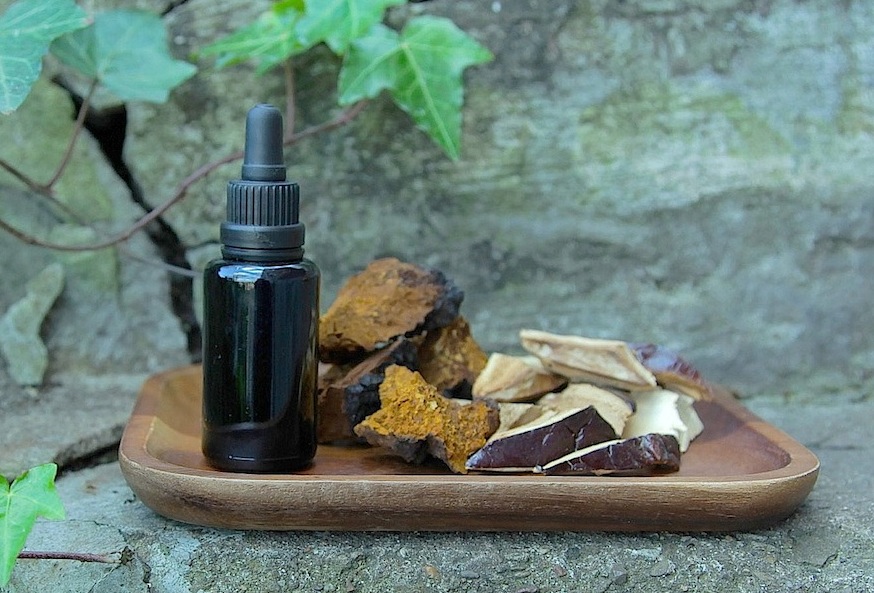
Chaga mushroom (Inonotus obliquus)

Chaga is a fungus that grows on birch trees in the cooler circumpolar areas of the Northern Hemisphere.  Traditionally it has been used as an herbal adaptogen in Siberian and Asian medicine, and has recently gained popularity in North America.  A few key compounds found in chaga include melanin, polysaccharides, triterpenoids, and polyphenols, all of which have been researched for their antioxidant, anti-tumor, anti-cancer, and anti-inflammatory effects (1,2).

Living in the northern part of the United States, I am fortunate to have access to wild chaga.  I ingest it in two forms as a staple of my herbal program: dual-extracted tincture and hot water decoction (tea).  Hardly a day goes by where I do not consume chaga mushroom, for I know the value that this tonic medicine possesses.

Reishi mushroom (Ganoderma tsugae or Ganoderma lucidum)

Like chaga, reishi mushroom has a long and rich history as a medicine, backed currently by a large amount of scientific research.  Two notable compounds in reishi include polysaccharides and triterpenoids, both of which have been studied for their anti-tumor, antioxidant, anti-cancer, antiviral, and liver-protecting effects (3,4).

Both Ganoderma tsugae and Ganoderma lucidum grow wildly in my area, although I tend to consume more of the former.  Like chaga, I ingest the dual-extracted tincture and hot water decoction on a routine basis (almost daily).

I understand that these medicinal mushrooms do not inhabit every ecosystem, and you may reside in an area that lacks their presence.  If this is the case, do not fret, for you have a few options.  Chaga and reishi can be purchased from a high-quality supplier in many forms (dried, capsules, tinctures).  If you’d like to save money, you can harvest other immuno-supportive plants within your ecosystem.

I am a believer in the theory that all the food and medicine we need grow within our local ecosystem.  Wild-crafted chaga and reishi mushrooms are fundamental to my immune system strategy for two reasons: they have been used traditionally by various cultures and they are very well researched.  Although my personal program is simple, it is extremely effective in keeping my body healthy.  I do not wait until I feel ill before I begin treating myself.  Rather, I consume herbal tonics on a daily basis to keep my immune system finely-tuned and vigilant at all times.

This seems to fly in the face of conventional wisdom.  The mainstream media, through advertisements and commercials, consistently promote synthetic drugs as treatment for illness.  Rarely, if at all, do we hear about all the preventative ways we can keep ourselves well.  Instead of food, medicine, movement, and exercise, we are pummeled with vaccines and drugs as promises for improved health.  A wiser approach, however, would focus less on treatment, and more on natural prevention.

Understand the importance of an immune system strategy, and view it as an insurance policy against sickness and disease.  Familiarize yourself with the natural medicines that grow all around you.  Work with them to strengthen your body, develop resilience against stressors, and enhance your natural immunity.

What strategies do you plan to implement this season?


Like what you’ve read and/or seen?  Sign up below to receive notifications for new posts, and don’t forget to check out the Facebook (facebook.com/wildfoodism) and Twitter (twitter.com/wildfoodism) pages to learn more about wild food nutrition and identification!

Thank you!
Adam Haritan

adamheadshot3

signinformwildfoodism

3 Herbs That Offer Protection Against The Flu

planttubeWhat is the best way to protect yourself against influenza?  According to the CDC, yearly vaccination is the first and most important step.  With so much push by the media, doctors, scientists, and health professionals to get the public vaccinated, one would think this to be the best approach.

But what does the research really say about flu vaccines?  The Cochrane Database of Systematic Reviews, considered a gold standard when it comes to scientifically validating medical interventions, had this to say (emphasis mine) in a review of the published research (1):

“Influenza vaccines have a modest effect in reducing influenza symptoms and working days lost. There is no evidence that they affect complications, such as pneumonia, or transmission.  WARNING: This review includes 15 out of 36 trials funded by industry … The review showed that reliable evidence on influenza vaccines is thin but there is evidence of widespread manipulation of conclusions and spurious notoriety of the studies. The content and conclusions of this review should be interpreted in light of this finding.”

The flu vaccine is not a magic bullet.  When research shows that it may have only a modest effect in reducing symptoms, another strategy is imperative.  There are far superior ways to protect yourself against seasonal illnesses, ways that are a bit less toxic, non-synthetic, and free of unwanted side effects.  In this post, I have uncovered 3 lesser-known natural ways to protect yourself against the flu.

Dandelion (Taraxacum officinale)

Dandelion:  what’s not to love?  It has a long history of traditional use as food and medicine, especially in Native American and Chinese cultures.  Dandelion has been used medicinally as a diuretic and a mild appetite stimulant, as well as a treatment for poor digestion, liver abnormalities, and high blood pressure.

Unbeknownst to some, dandelion also possesses anti-viral action, especially against influenza virus type A.  Research has shown that aqueous extracts of dandelion reduce viral growth by inhibiting viral replication and infection in vitro (2).  Furthermore, there appear to be no side effects associated with the prolonged use of dandelion for therapeutic purposes.

Dandelion is found in all 50 states, most Canadian provinces, and in countries all over the world.  A simple and effective step you can take is to harvest the plants from a clean environment and incorporate them into your dietary and medicinal programs.  Sure, you can purchase dandelion extracts from a retailer, but you can save money and receive numerous auxiliary benefits by seeking them out yourself.

Black currant (Ribes nigrum)

Black currant is a deciduous shrub native to northern Europe and Asia.  Like dandelion, it has a long history of traditional use both as food and medicine.  Oil from its seed is popular in the supplement industry as a source of gamma-linolenic acid, a polyunsaturated fatty acid utilized as a precursor to hormones.

New research has shown that an extract from the leaves of black currant possesses anti-viral activity against influenza type A virus in vivo and in vitro, primarily by preventing viral entry into cells (3).  Furthermore, the extract displayed no side effects in this particular study.  The researchers were so amazed that they classified the black currant leaf extract as a potential supplementary and/or replacement strategy for current anti-influenza treatments.

Black currant’s action as an anti-viral agent is one more reason to include this species in your diet.  Here in the United States, its distribution is more limited than dandelion’s.  If you find it difficult to locate in the wild, you can purchase black currant leaf extracts from retailers.

Ginseng (Panax ginseng)

Ginseng is a perennial plant found in North America and Asia.  It is extensively used in Traditional Chinese Medicine as an immunomodulator and adaptogen, and today it can be readily found in various forms (supplements, drinks, teas, etc.).  While many people think of ginseng as an energizing tonic, it has also been shown to possess powerful anti-viral properties, especially against influenza type A virus.

In one particular study, researchers found that mice treated 6 hours in advance with a red ginseng extract (containing ginseng polysaccharides) survived lethal treatment of influenza virus (4).  Mice that were not given the red ginseng extract all died or were euthanized by day 8, and displayed more severe weight loss than the former group.  This was also shown in another subtype of influenza virus, where results were similar.

Because this study was done in mice, it’s difficult to say that the same results would apply in humans.  But the researchers concluded that consumption of ginseng, along with its polysaccharides, would be beneficial to healthy individuals in preventing unexpected influenza infections.

Ginseng grows wildly in the Northern Hemisphere, although it may be difficult to locate.  Many ginseng supplements are on the market (some much better than others), providing an alternate and easier way to acquire its medicine.

Ginseng, dandelion, and black currant all demonstrate potent anti-viral activity against influenza viruses.  Even better, they perform their roles without any significant side effects.  Remember, receiving the flu vaccine does not guarantee you anything.  Many who get the vaccine, however, take no other actions to protect themselves against illness, thinking that immunity has been granted until next year’s shot.

What a poor strategy.  It makes intuitive sense that a robust immune system would be necessary for protection against viruses, bacteria, toxins, etc.  When there is hardly a push to get the public proactive in taking care of their health through proper diet, exercise, and other good lifestyle habits, no wonder people think that prevention equals vaccination.

What does a responsible adult do?

A responsible adult does the research.  She examines the scientific literature and decides the best course of action for her and her family.  She practices an immuno-supportive lifestyle, ingesting high quality foods and natural herbal medicines from her ecosystem.  Because of this proactive lifestyle, the responsible adult puts her and her family’s health first, with no influence from the mainstream media.  She knows that her family’s health is stronger than it ever has been without any help from conventional medicine, and because of this, she makes the most responsible decision.

My advice?  Implement an immuno-protective strategy.  Consume high quality foods and herbs.  Practice that which supports a healthy mind and body.  Do the research.  Make an informed decision.

Thanks for reading, and as always … happy foraging!


Like what you’ve read?  Sign up below to receive notifications for new posts, and don’t forget to check out the Facebook (facebook.com/wildfoodism) and Twitter (twitter.com/wildfoodism) pages to learn more about wild food nutrition and identification!

Thank you!
Adam Haritan

adamheadshot3

signinformwildfoodism

Wild berries and health, Part 3: Fat metabolism

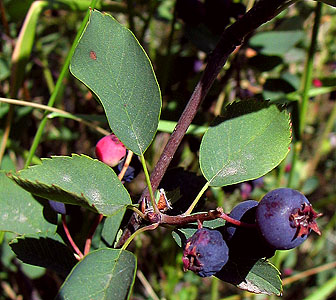
SilverBuffaloberryWe have been exploring the phytonutrient actions of wild berries relating to human health in this 3-part series.  If you are just joining us, here are links to the previous posts:

Wild berries and health, Part 1: Diabetes

Wild berries and health, Part 2: Inflammation

In this third and final post, I will be showcasing the role of certain berries in regards to lipid metabolism and energy expenditure.  Just in case you forgot which wild berries the researchers in this study analyzed, here is the list again (1):

  • serviceberry (Amelanchier alnifolia)
  • highbush cranberry (Viburnum trilobum)
  • chokecherry (Prunus virginiana)
  • silver buffaloberry (Shepherdia argentea)

The human body derives most of its energy from carbohydrates and fats (lipids).  Lipid metabolism refers to the synthesis of fats, as well as the way the body converts fats into energy.  It is critical that these processes run effectively, but in certain conditions this is not the case.  In metabolic syndrome, for instance, fat metabolism is impaired, resulting in increased levels of circulating free fatty acids and fat accumulation.  It is normal for lipids to reside in the blood (especially after a meal), but when they do not get shunted to their proper destination (liver, brain, etc.), problems can arise.

In this study, the researchers analyzed how the berries influenced fat metabolism by measuring fatty acid oxidation, or the way fats are converted to energy.  They also measured mitochondrial number to determine the effect of berry samples on the energy status of cells.  Mitochondria are the areas within cells responsible for energy production, and in abnormal conditions like metabolic syndrome, the number and function of mitochondria are impaired.

The researchers discovered that extracts from highbush cranberry, chokecherry, and silver buffaloberry displayed notable activity for enhancing lipid metabolism, while serviceberry and chokecherry increased mitochondrial number.  The findings led the authors to conclude that the ability of the berry samples to modulate lipid metabolism and energy expenditure is consistent with improvements in metabolic syndrome.

Quite the exciting discovery!  Metabolic syndrome encompasses a host of risk factors, including high blood pressure, high blood sugar, high triglycerides, low HDL, and belly fat.  According to the CDC, approximately 34% of adults 20 years and older meet criteria for metabolic syndrome, with the likelihood increasing with age (2).  When there are foods associated with improvements in metabolic syndrome, it may be prudent to seek them out and incorporate them into your current diet.

Sure enough, there are plenty of foods associated with improvements in metabolic syndrome.  Service berry, highbush cranberry, chokecherry, and silver buffaloberry all have the ability to improve the health of those who consume them.  Although this has been suggested by this particular study, keep in mind that the scientific method is only one way to seek answers.

Wild berries have been consumed for millenia by the indigenous peoples of North America.  The illnesses discussed in this series result from the abandonment of traditional dietary habits in exchange for the highly refined and domesticated foods of modernization.  It is no surprise that we do not see the rates of degenerative diseases in Natives who follow their traditional diets anywhere near as high as the rates experienced by modern, civilized humans.

It is important, now more than ever, to implement a strategy reacquainting yourself with the wild foods growing in your ecosystem.  Research the distribution of these four berries, along with other edibles, and begin the sustainable practice of gathering them for your consumption.  Consider them your allies in protecting yourself against the insidious diseases of affluence, and discover for yourself what it means to relay the inherent health of the Earth into your body.

Wild berries and health, Part 2: Inflammation

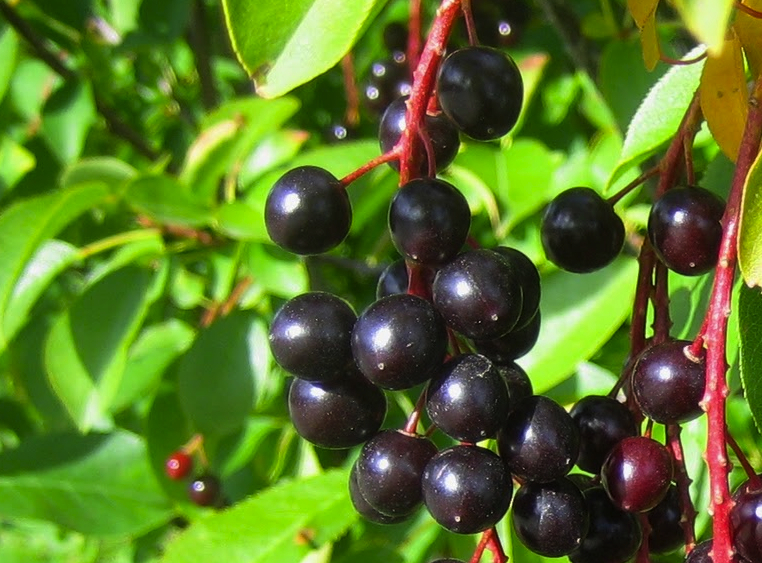
chokecherryIn the previous post, I discussed the action of certain compounds in wild berries that may offer protection against diabetes.  But if the discussion stopped there, several other important roles involving phytonutrients would go unnoticed.  Not only do extracts from wild berries exhibit aldose reductase inhibition (blocking the conversion of excess glucose to sorbitol), they also display anti-inflammatory effects (1).  This is no surprise, as diabetes and inflammation are related, especially in the condition of obesity-associated insulin resistance (2).

Here is the list of the 4 berries that were analyzed in the study:

  • serviceberry (Amelanchier alnifolia)
  • highbush cranberry (Viburnum trilobum)
  • chokecherry (Prunus virginiana)
  • silver buffaloberry (Shepherdia argentea)

The researchers discovered that compounds in all 4 berries exhibited anti-inflammatory effects, specifically in reducing Interleukin-1 beta (IL-1β) and Cyclooxygenase-2 (COX-2) expression.  IL-1β is a cytokine produced endogenously as a regulator of the body’s inflammatory response.  It has been a target for type 2 diabetes (3) because of its association with the death of beta cells, whose job it is to store and release insulin.  IL-1β, in addition to its role in diabetes, is implicated in other processes involving pain, inflammation, and autoimmune conditions.  Chokecherry and silver buffaloberry demonstrated the strongest effects in reducing IL-1β.

COX-2 is an enzyme involved in inflammation and is a target for NSAIDS like aspirin and ibuprofen.  Normally the enzyme is unexpressed, but in the inflammation process it is activated.  Chokecherry and silver buffaloberry, in addition to reducing IL-1β, also reduced the expression of COX-2.

Not all inflammation is bad, however, as short-term acute inflammation is necessary for defense against toxins, injury, and stress.  Instead, it is chronic inflammation that never gets extinguished.  In this state, the body continuously produces inflammatory mediators which alter normal physiological functions.  Diabetes and obesity are both associated with chronic inflammation, and reducing inflammation may protect against diabetes even in the obese (4).  For this, a dietary strategy may indeed help.

As seen in this research, wild berries, in particular chokecherry and silver buffaloberry, contain plant chemicals that reduce the expression of certain inflammatory compounds.  Although not specifically analyzed, it’s hard to imagine that wild edible berries exhibit the same unpleasant side effects that NSAIDS may create (increased chance of heart attack, stroke, liver damage, kidney damage, headaches, etc.).

Remember, in addition to the scientific evidence, we also have extensive traditional usage of berries amongst numerous groups of people.  It is only within the last few centuries that these foods have fallen out of favor, and, not surprisingly, the health of the general population has declined.

Stay tuned for part 3 of this series, where we will look at wild berries and fat metabolism, and put it all together.

Wild berries and health, Part 1: Diabetes

serviceberryBerries are excellent fruits to add to your wild food diet.  They’re plentiful, they taste great, and they have been used extensively by Natives in their traditional diets.

But what exactly makes wild berries so nutritious?  Researchers wondered the same thing, and in 2008, a study was published in the Journal of Agricultural and Food Chemistry examining the phyto-composition of four traditionally-used berries in North America (1).  These berries were:

  • serviceberry (Amelanchier alnifolia)
  • highbush cranberry (Viburnum trilobum)
  • chokecherry (Prunus virginiana)
  • silver buffaloberry (Shepherdia argentea)

In this 3-part series, I will be discussing the actions of certain compounds analyzed by the researchers, as well as explaining the potential benefits they may confer to our health.

First up: protection against diabetes.

Diabetes mellitus is a group of diseases related to the way the body handles blood glucose.  In a hyperglycemic state (high blood sugar), the body tends to convert more glucose to a sugar alcohol known as sorbitol.  This is done through the enzyme aldose reductase, which, among other places, functions in the eye, kidney, and myelin sheath.  Normally, only a small amount of glucose is converted to sorbitol, but in a hyperglycemic state the conversion is increased.  Excess sorbitol in the body can result in vision problems, kidney problems, and nerve damage.  In short, extra aldose reductase activity is associated with diabetic complications.

Enter wild berries.

The researchers found that all four berries demonstrated the ability to inhibit aldose reductase, with serviceberries and highbush cranberries showing the most effect.  Inhibiting aldose reductase means producing less sorbitol, which could lead to fewer eye, kidney, and nerve complications associated with diabetes.  Furthermore, the berries also displayed the capacity to improve glucose uptake.

In addition to aldose reductase inhibition, berries, on average, contain less sugar than other fruits, with wild berries generally having even less than their cultivated counterparts.  This should also be kept in mind for individuals with diabetes.

It’s important to note that it hasn’t been proven that these berries decrease diabetic complications, but that certain compounds isolated from them may have the ability to do so.  Still, the Natives consumed these berries and no doubt reaped the rewards that the phytonutrients provided.

What can you do?  See which wild berries inhabit your ecosystem and harvest them in season.  I like to freeze and later add them to blended drinks throughout the autumn and winter months, thereby extending the benefits they provide.  Especially if you are dealing with any blood sugar issues, consuming wild berries in addition to practicing healthy lifestyle habits can support blood sugar regulation.

Next up in this series:  wild berries and inflammation.

6 Reasons To Eat Wild Food

wildreasonsThere are too many reasons why a wild food diet makes sense.  Remember, it does not have to be all or nothing.  Even incorporating just a small portion of wild edibles into your current diet will provide numerous benefits.

Here are 6 reasons to practice Wild Foodism:

1:  It is the most natural diet

For a long time, it seemed as if local and organic were enough.  Then raw foodism exploded onto the scene, raising the point that humans are the only animals that cook their food.  And more recently, we have the Paleo diet, which advocates an ancestral way of eating.  But the proponents of these diets rarely mention the kind of food that Homo sapiens consumed for the majority of their time on this planet:  food from the wild.  No matter how local, organic, raw, or Paleo a diet may be, none can be as natural as a wild food diet.

2:  More nutritious

Wild edibles are, on average, more nutritious than their cultivated counterparts.  They generally contain more phytonutrients (antioxidants), more vitamins and minerals, more fiber, less calories, and a better omega-6 to omega-3 fatty acid ratio.

3.  Connection to your ecosystem

Modern humans consume meals with ingredients sourced from all over the world.  Even something as simple as a fruit salad can contain apples from New Zealand, bananas from Ecuador, and pineapple from Costa Rica.  Eating wild organisms directly from your ecosystem connects you immediately to your land.  You know where the food grows, when it grows, and what it looks like.  Harvesting wild food creates a story between yourself and what nourishes you.  Those who do not share this same connection will be less likely to express concern when wilderness is cleared to make room for the next big-box store, for these individuals experienced no value from the land in the first place.

4:  Food security

When you can locate, identify, and harvest your food, food security is greatly increased.  Many of us are completely dependent upon grocery stores for our food, and pharmacies for our medicine.  But knowing how to source our food and medicine directly from our land provides a huge safety net, especially in times of need.  In an emergency, would you be able to feed yourself from the land?  Could you locate and harvest clean water?

5:  The cost

Many people claim that eating healthy is expensive.  “I’d buy organic, but it just costs too much,” they say.  Well, what if I told you that you could eat healthier (much healthier!) and do so for free?

Eat wild food (plants, animals, fungi) and watch your food expenses drop.  Sure, nibbling on wild greens from time to time may not save you much, but if you know how to source the calorically-dense wild foods, like nuts, tubers, fruits, and animals, you will really see a difference in your expenditures (and your health).

6.  Outdoor experience

Many of us spend most of our hours indoors.  We sleep indoors, play indoors, shop indoors, cook indoors, and work indoors.  Is it any surprise that we long for a summer vacation with a beautiful landscape – the beach, the mountains, the woods?  Harvesting wild food is not feasible indoors.  Instead, it requires you to get outside and immerse yourself in a door-less world.   As you begin the foraging process you will discover many more reasons to step outside.  Need some greens? Berries for a smoothie?  How about some roots for a hot-water decoction?  Explore the outdoors and see what you stumble upon.

Of course, there are so many other reasons why a wild food diet makes sense.

What are some of the reasons that inspire you?


Like what you’ve read and/or seen?  Sign up below to receive notifications for new posts, and don’t forget to check out the Facebook (facebook.com/wildfoodism) and Twitter (twitter.com/wildfoodism) pages to learn more about wild food nutrition and identification!

Thank you!
Adam Haritan

adamheadshot3

signinformwildfoodism

Clay Removes Tannins From Acorns

redoakOne of the most under-utilized foods in our current culture is the acorn, the majestic nut of the oak genera (Quercus).  Many people think of the acorn as a strictly Native American food, but its consumption has been documented all over the world, including in Europe, Asia, and northern Africa.

There are plenty of resources available detailing the instructions on processing acorns (web sites, videos, books) in order to decrease their levels of tannins, so I will not belabor the subject.  Once you master the art of leaching, you may be interested in another traditional processing method to remove the tannins.  This involves the use of clay.

You see, tannins are astringent substances of plant origin that, when consumed in sufficient amounts, can interfere with mineral and protein absorption.  In small amounts, however, they can be quite beneficial.  It is rarely discussed that, in addition to hot and cold water leaching, mixing clay (specifically red clay) with non-leached acorn meal can reduce bitterness, increase palatability, and decrease tannic acids.

Two researchers, Timothy Johns and Martin Duquette, studied the uses of clay amongst the Pomo people of California and the natives of Sardinia (1).  These geographically separated groups produced acorn bread in slightly different ways using clay to increase palatability.

To make acorn bread, the Pomo would mix clay with ground acorn meal in a ratio between 1:10 and 1:20, to which water would then be added.  Small loaves would be formed and baked in an earth oven for 12 hours.

In Sardinia, the natives would stir clay with cold water, then add the mixture to a pot of dried acorn meats (1:8, clay to acorns).  After boiling for five hours, ash from grape vines would be combined, allowing the entire mixture to cook for a few more minutes.

Through these methods, as much as 77% of the tannin content could be reduced without any prior leaching.  But when Johns and Duquette experimented with the adsorption capacity of clay for tannins in the laboratory, they discovered something different*.  Only about 8-12% of the tannin content of acorns could be reduced in the recommended amounts by the Pomo and Sardinian natives.  This is clearly not a significant reduction, and could render the acorns slightly toxic with levels of tannins still too high.

How, then, were the natives able to consume the acorn bread, and how did Johns and Duquette arrive at the original reduction number of 77%?  It turns out that when acorn bread (with clay) is baked in oven temperatures at or above 100° Celsius for many hours, the tannin content can be reduced by several times what can be achieved through laboratory adsorption alone.  According to the researchers, heat may increase the adsorption capacity of the clay for tannins, but more likely increases catalytic activity in actually breaking down the tannic acids.

Takeaway message:  If you’re looking to use clay for the purpose of leaching acorns, using heat will dramatically improve the leaching process for the reasons stated above.

Oak trees are found in abundance all over the world, which means that food is available for all who are interested.  Acorns are very nutrient-dense at around 13% fat, 41% carbohydrate, 8% fiber, and 3.5% protein (2).  I encourage you to gather acorns and learn the traditional art of processing and cooking them, both through leaching and through the addition of clay.

Acorns are true superfoods, and making them a regular component of your diet will benefit your health, your family’s health, and the planet’s health.

*Adsorption, different than absorption, is the adhesion of a chemical species onto the surface of particles.  In this example, tannins are adsorbed by the clay.


Like what you’ve read?  Sign up below to receive notifications for new posts, and don’t forget to check out the Facebook page (facebook.com/wildfoodism) to learn more about wild food nutrition and identification!

Thank you!
Adam Haritan

adamheadshot3

signinformwildfoodism


The 10 Most Utilized Plants By Native Americans

westernredcedarIf the saying is true, that we are what we eat, it’d be fair to say most Americans are walking columns of corn, soy, and wheat.  These three crops are grown in abundance for many reasons.  Most people consume manufactured forms of these foods, like wheat-based cereals and breads, soy-based emulsifiers and oils, and corn-based … well, pretty much everything from sweeteners to thickeners.  Animal feed is also supplemented with these crops, so when we’re eating the animals, we’re essentially eating more corn, soy, and wheat.

And then there are hundreds of other reasons why these items are mass-produced.  We produce fuel, plastics, paints, pharmaceutical excipients, candles, etc. from food crops.

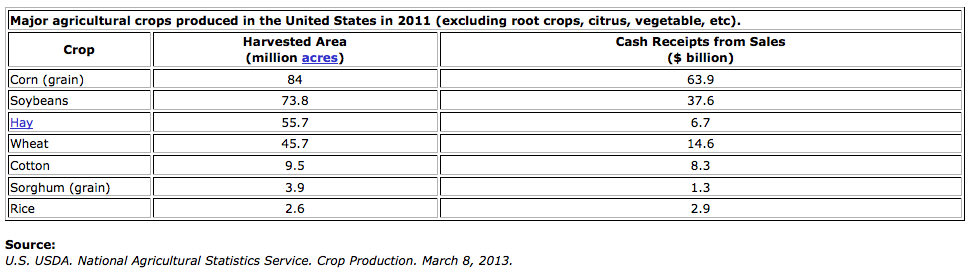
Here is a chart detailing seven major agricultural crops produced in the United States in 2011.  It does not include root, citrus, and vegetable crops, like potatoes, tomatoes, and oranges, but instead presents a more generalized snapshot of American agriculture.  Take a look (click to enlarge):

majorcrops

This probably doesn’t come as a surprise to very many people.  From a Wild Foodism standpoint, however, these foods aren’t too exciting nor promising.

As a resident of North America (Pittsburgh, Pennsylvania to be exact), I am far more interested in the foods that the Natives utilized as treasured resources, rather than the foods that make the most profit.  This is valuable information for anyone attracted to Wild Foodism.

Believe it or not, there are indeed certain species that once possessed more utility than someone today might imagine.  These plants were incorporated into cultures as drugs (medicine), food, fiber, dyes, and other things (incense, talismans, toys, fragrances, tools, etc.).

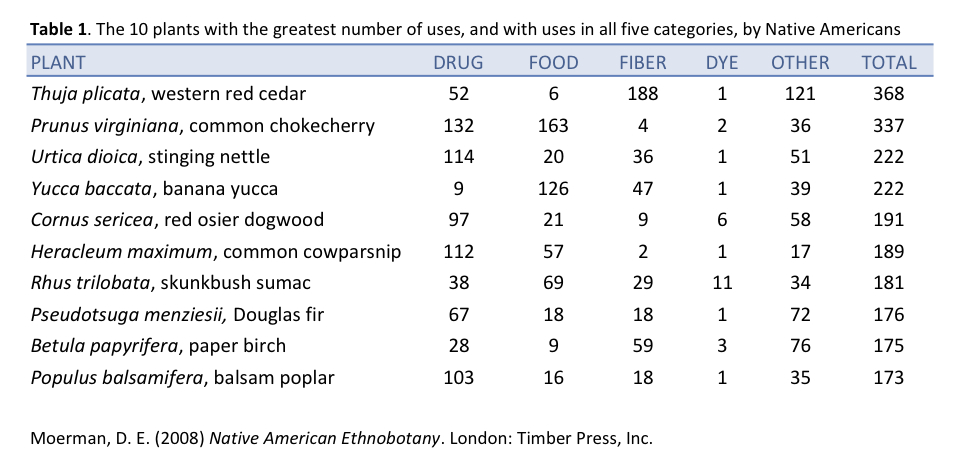
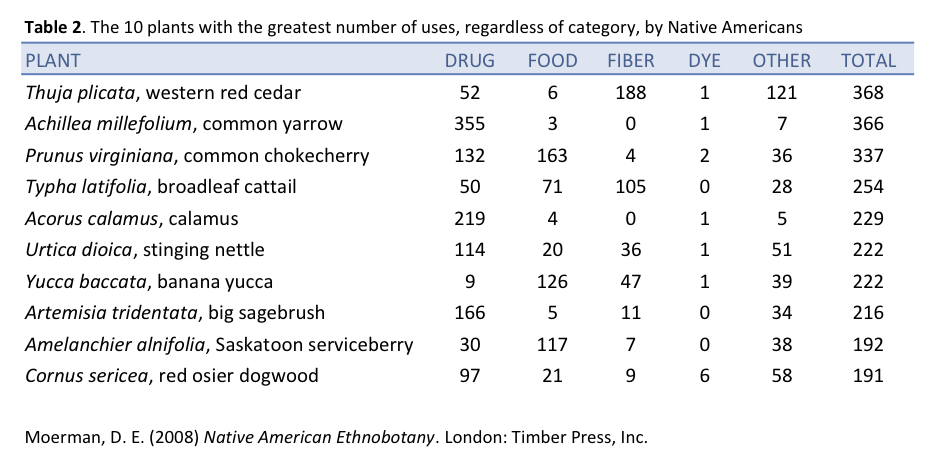
I have included two charts, similar to the one above, examining the most utilized plants in Native American culture.  Both tables are taken from Daniel E. Moerman’s tome, Native American Ethnobotany (2008).

The first table outlines the 10 plants with the greatest number of uses, and with uses in all five categories (click to enlarge).

Moermantable1

The second table outlines the 10 plants with the greatest number of uses, regardless of category (click to enlarge).

Moermantable2

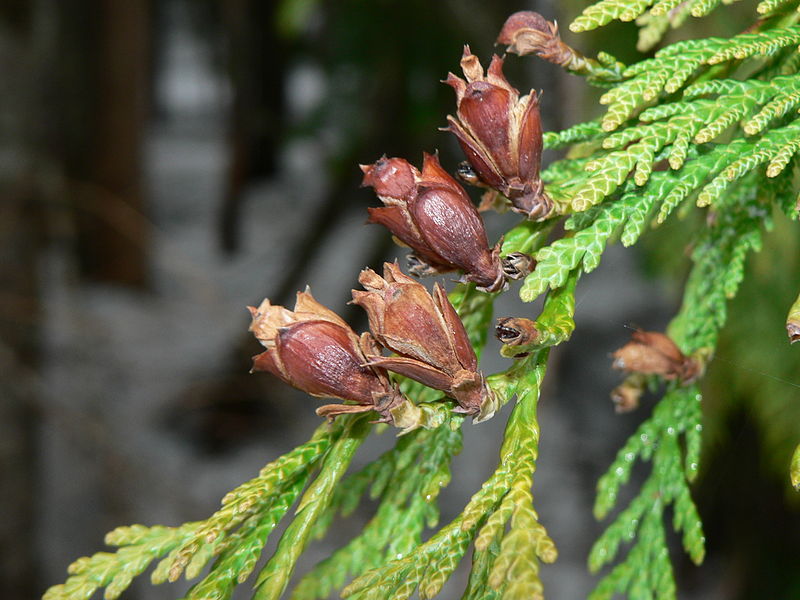
It’s important to note that not all of these plants grow throughout North America.  Western red cedar, for example, is primarily found in the Pacific Northwest.  Stinging nettle, on the other hand, grows throughout most of the United States and Canada.

If you are not familiar with these organisms, I encourage you to seek out more information regarding their uses.  There are reasons (very good reasons!) the Natives chose these particular plants to be their allies in everything from medicine to food.

Sure, Triticum aestivum (common wheat) may serve a purpose in your life.  If nothing else, it’s pretty neat to watch bread rise with the help of yeast.  But never forget:  dietary diversity is crucial for robust health, and consuming an agricultural diet of corn, soy, and wheat in their various adulterations may not be the greatest health strategy long-term.

What is a great strategy, however, is to include more wild foods into your lifestyle.

What can you do right now?  Take a look at the latter tables above and see which plants inhabit your ecosystem .  Research their traditional uses and begin to incorporate them into your life.

And ask yourself, from what building blocks do you want your body to be built?  The genetically modified, chemically-laden inferior foods of agriculture, or the wild and hearty organisms of the natural world?


Like what you’ve read?  Sign up below to receive notifications for new posts, and don’t forget to check out the Facebook (facebook.com/wildfoodism) and Twitter (twitter.com/wildfoodism) pages to learn more about wild food nutrition and identification!

Thank you!
Adam Haritan

adamheadshot3

signinformwildfoodism